The heavy trucking industry across Western Canada is experiencing a surge in demand for oversized freight transport. From mining expansions in northern Alberta to large-scale construction and energy infrastructure projects, the need to move extremely large, heavy, and specialized equipment has grown significantly in recent years.
Oversized freight (often referred to as heavy haul, project cargo, or oversized load transport) requires specialized trailers, detailed route planning, permits, escort vehicles, and experienced carriers capable of managing complex logistics.
Companies like Bowline Logistics play a critical role in ensuring these loads move safely and efficiently between job sites, fabrication facilities, ports, and distribution hubs across Alberta, Western Canada, and cross-border corridors between Canada and the United States.
As industries scale operations and infrastructure projects expand, oversized freight transport has become a key component of the region’s supply chain. Understanding why demand is growing and how logistics providers manage these moves, helps businesses better plan for large-scale equipment transportation.
Why Oversized Freight Transport is Growing Across Western Canada
Several macroeconomic factors are driving the rise of heavy haul trucking and oversized freight movement across Canada and North America.
Infrastructure spending, industrial expansion, and new energy development have all contributed to the increased movement of extremely large equipment and modular structures.
According to Natural Resources Canada, the country’s mining, oil, and energy industries continue to invest billions of dollars in new projects and infrastructure each year. These projects rely heavily on specialized transportation providers to move oversized equipment and fabricated structures to remote job sites.
Similarly, Statistics Canada reports that freight transportation demand has continued to grow alongside major industrial sectors such as mining, manufacturing, and construction.
Unlike traditional freight shipping, oversized loads cannot be easily broken down into smaller shipments. This means the transportation logistics must be carefully engineered, often involving multi-truck coordination and precise scheduling. Oversized freight commonly includes:
-
Mining equipment and heavy machinery
-
Industrial manufacturing components
-
Modular buildings and prefabricated structures
-
Construction equipment and infrastructure components
-
Energy sector equipment such as transformers and turbine components
Because these items are so large and heavy, they require specialized heavy haul trucking companies with experience navigating complex routes and regulatory requirements.
Mining Operations: Big Jobs Require Bigger Freight
The mining industry remains one of the largest drivers of oversized freight demand in Alberta and Western Canada. Mining operations often take place in remote regions, far from traditional transportation hubs. As a result, getting equipment to site requires careful logistics planning and specialized transportation equipment.
Mining companies regularly move extremely heavy machinery such as:
-
Dozers
-
Excavators
-
Loaders
-
Mining trucks
-
Large graders and shovels
-
Processing and screening equipment
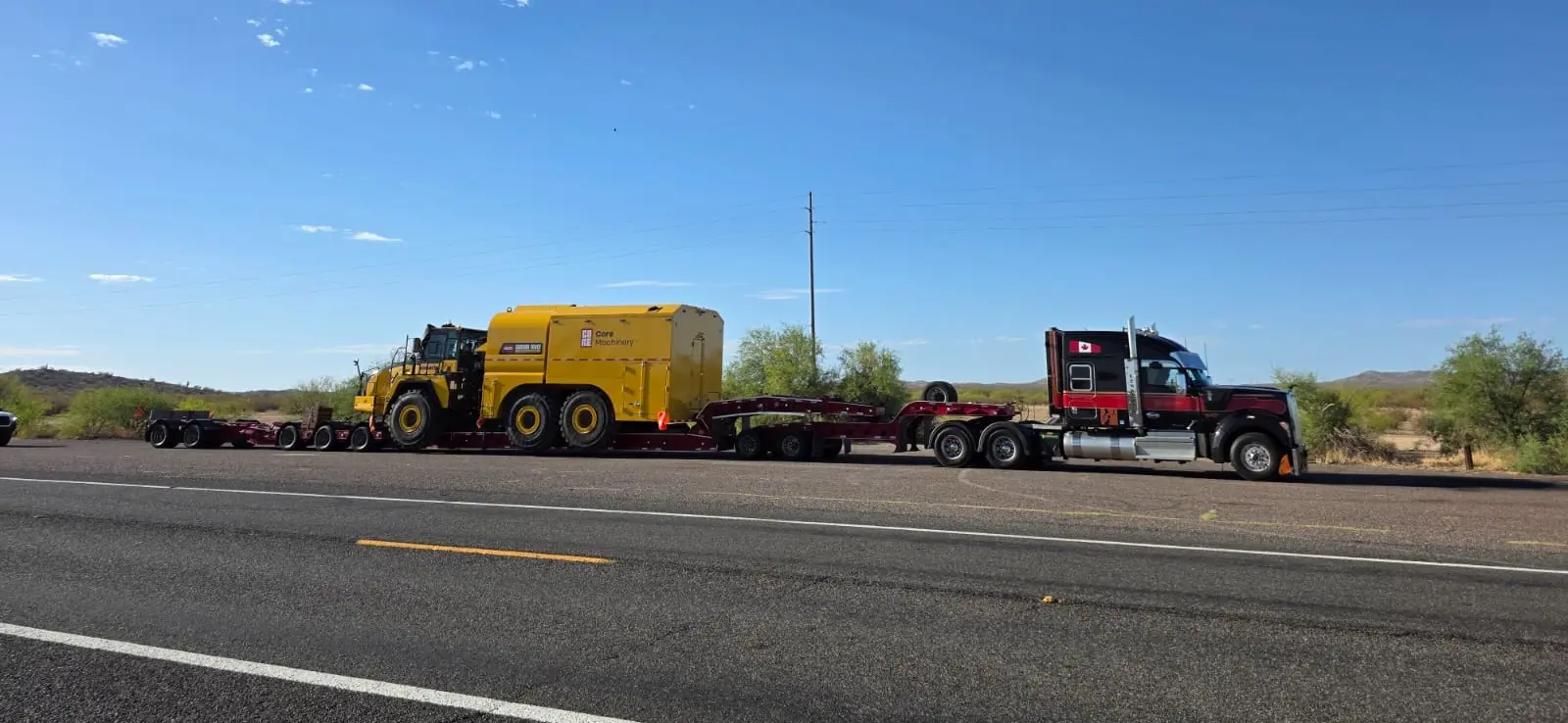
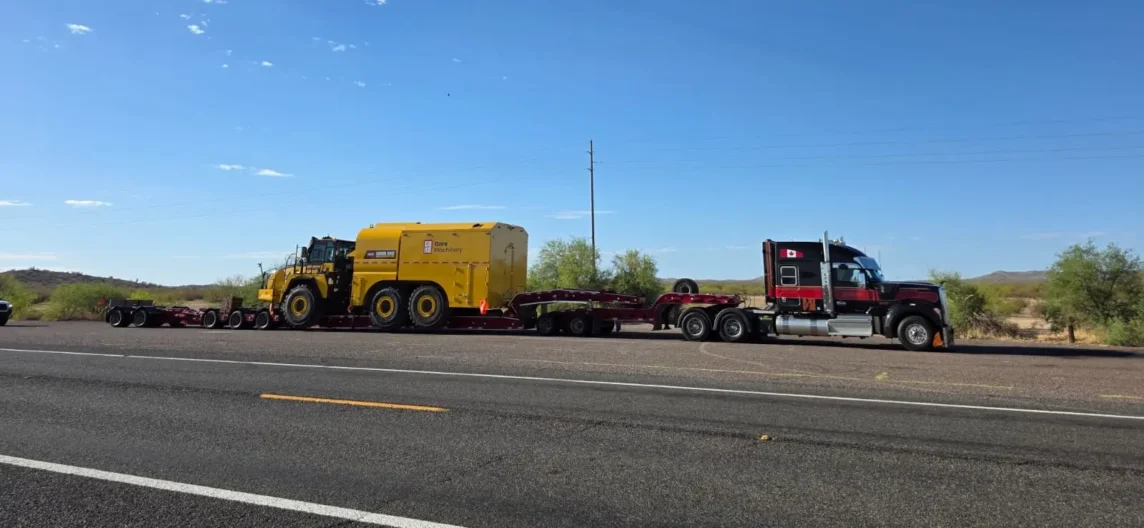
These machines can weigh tens or even hundreds of thousands of pounds, making them impossible to move with standard freight equipment. Bowline Logistics supports mining operations by coordinating multi-truck hauls and extreme weight class shipments, ensuring large equipment arrives safely at site locations without delays.
Transporting mining equipment also requires extensive route analysis, especially when shipments must travel through rural or mountainous terrain. Road restrictions, bridge weight limits, and narrow access points often require custom logistics planning.
Oversized freight movements frequently require multi-truck coordination, particularly when large machines or modular components cannot be transported in a single shipment. Equipment may arrive in phases so that crews on site can assemble or deploy components in the correct order. Coordinating these deliveries reduces downtime and helps project teams keep construction and installation schedules on track.
Once equipment arrives at site, on-site supervisors and logistics coordinators often oversee the unloading process. Working alongside crane operators and construction crews, they help ensure heavy equipment is removed safely from trailers, positioned properly, and handled in accordance with site safety requirements.
For large projects such as mines, energy facilities, or major construction developments, transportation needs rarely end with a single delivery. Many projects require scalable transport capacity over months or even years as additional equipment, materials, and modular structures are brought in to support ongoing site development.
For mining companies operating on strict project timelines, reliable oversized freight transport can make the difference between staying on schedule and experiencing costly delays.
Construction and Heavy Equipment Moves
Construction is another major sector fuelling the growth of oversized freight transport in Western Canada. Large infrastructure projects, such as highways, bridges, pipelines, and industrial developments, require the movement of heavy construction equipment between job sites.
Equipment frequently transported across Alberta and Western Canada includes:
-
Excavators
-
Crushers and screeners
-
Graders and compactors
-
Structural steel and large beams
-
Aggregate processing equipment
These pieces of machinery often travel between dealerships, auction yards, and construction projects throughout the region. Bowline Logistics specializes in transporting high-value construction equipment and heavy machinery, ensuring equipment arrives safely and on schedule.
Heavy equipment transport requires specialized trailers such as lowboys, step decks, and ground loading trailers, allowing self-propelled machines to load and unload efficiently. Logistics providers also frequently coordinate multiple equipment moves simultaneously, especially when companies relocate entire fleets or shift equipment between large construction projects.
This level of coordination helps construction companies minimize downtime and keep projects moving forward.
Industrial Manufacturing and Facility Relocation
Oversized freight transport is also essential for industrial manufacturing operations. Manufacturers often need to move extremely large machinery between facilities or relocate entire production lines.
Industrial freight shipments may include:
-
CNC machines
-
Industrial presses
-
Kilns and conveyors
-
Steel fabrication equipment
-
Modular processing units
Because these machines are sensitive to vibration and movement, specialized securement strategies are required to prevent damage during transit. Bowline Logistics supports manufacturers with timed deliveries and direct routing, ensuring equipment arrives exactly when production schedules require it.
Facility relocations are particularly complex. Equipment often needs to be transported in phases, with storage and staging required between shipments. Cross-docking and temporary storage solutions allow logistics providers to manage large relocation projects efficiently while keeping freight secure.
For manufacturers, minimizing downtime during equipment relocation is critical. Reliable oversized freight transport helps ensure operations resume quickly after equipment arrives at its new destination.
Project Cargo and Complex Freight Logistics
Many industries rely on project cargo logistics when moving extremely large or complex freight shipments. Project cargo refers to shipments that require detailed planning, specialized equipment, and coordinated transportation across multiple trucks or transport modes.
These shipments are often associated with:
-
Oil and gas infrastructure projects
-
Energy sector developments
-
Engineering and industrial installations
-
Aerospace and specialized manufacturing
Project cargo moves frequently involve oversized and high-value freight that must be delivered in a precise sequence. Bowline Logistics provides end-to-end project cargo management, overseeing every aspect of the transport process from planning to final delivery.
This includes coordinating permits, arranging pilot cars, managing escorts, and ensuring compliance with transportation regulations across Canada and cross-border routes into the United States. Dedicated project coordinators oversee complex freight moves, working closely with installation teams and site supervisors to ensure deliveries align with construction timelines.
This level of coordination ensures that large infrastructure projects stay on schedule while minimizing risks associated with transporting oversized freight.
Energy and Utility Infrastructure
The energy sector is another major contributor to oversized freight demand across Alberta and Western Canada. Oil and gas facilities, renewable energy projects, and power generation infrastructure all rely on specialized heavy haul transportation.
Energy-related oversized freight commonly includes:
-
Wind turbine components such as nacelles and rotor hubs
-
Electrical transformers and substations
-
Large conduit and cable reels
-
Industrial tanks and energy modules
Wind turbine blades alone can exceed 70 metres in length, requiring specialized extendable trailers and careful route planning. Moving energy infrastructure also requires detailed coordination with utility companies and installation crews. Many deliveries must occur at specific times to align with crane operations or site construction schedules.
Bowline Logistics supports energy companies by providing specialized trailers capable of handling extreme weight and length requirements, along with experienced crews that manage permits, escort vehicles, and safety planning. Reliable transportation ensures these critical energy projects move forward without costly delays.
Transporting Modular and Prefabricated Buildings
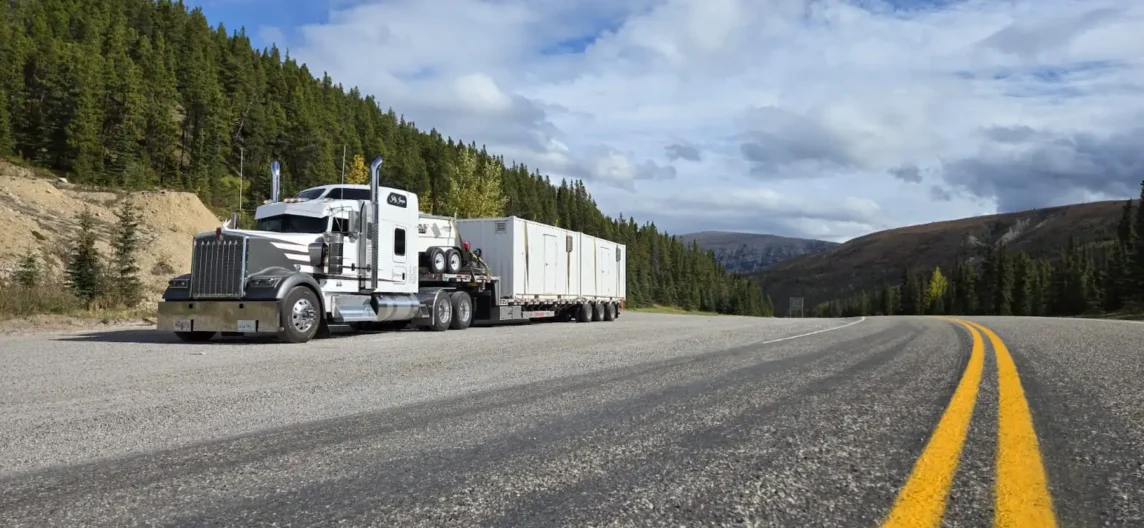
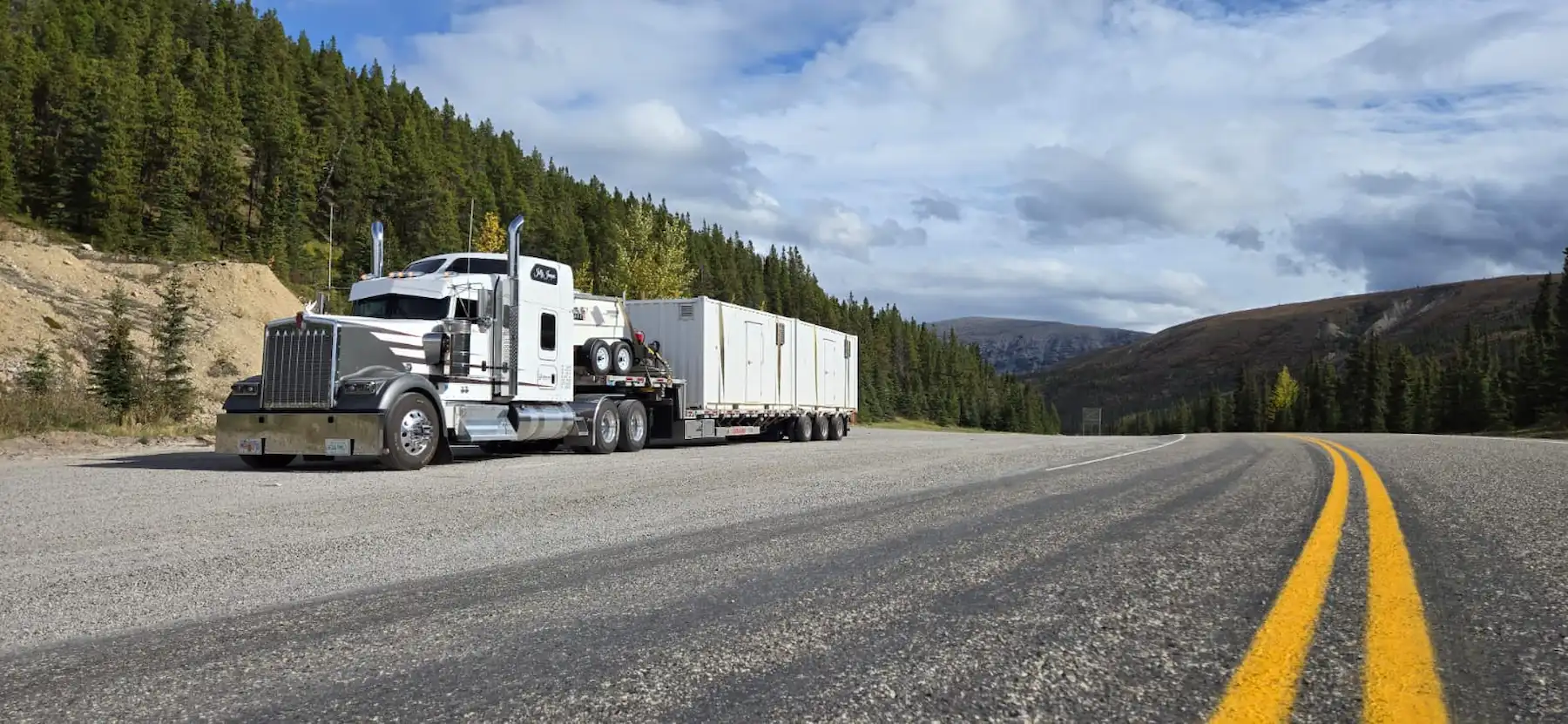
Another growing area of oversized freight transport involves prefabricated and modular structures. Modular construction has gained popularity across Canada because it reduces construction timelines and allows buildings to be manufactured off-site before being transported to their final location. These buildings often travel as fully finished units, making safe transportation essential.
Common modular freight shipments include:
-
Portable classrooms
-
Job site trailers
-
Container offices and washroom units
-
Multi-section modular homes
-
Industrial modular buildings
Transporting these structures requires specialized trailers such as winch and trombone trailers, along with securement strategies designed to protect walls, frames, and interior components. Bowline Logistics works closely with modular building manufacturers to ensure these structures arrive safely and ready for installation.
Cross-Border Oversized Freight Between Canada and the United States
Many oversized freight shipments also move cross-border between Canada and the United States. Western Canada’s industries frequently rely on equipment manufactured in the United States, while Canadian mining and energy companies export machinery and fabricated components south of the border.
Cross-border heavy haul trucking requires expertise in customs compliance, permits, and international logistics planning. Bowline Logistics operates as a bonded carrier, allowing shipments to move smoothly through border crossings while meeting all regulatory requirements.
Managing cross-border oversized freight involves:
-
Coordinating permits across multiple jurisdictions
-
Managing customs documentation
-
Scheduling pilot vehicles and escorts
-
Ensuring compliance with transportation regulations
Efficient cross-border logistics ensures oversized freight can move seamlessly between Alberta, Western Canada, and key industrial markets across North America.
The Future of Oversized Freight Transport
Demand for oversized freight transport will likely continue to grow as industries invest in infrastructure, energy development, and large-scale construction projects. Western Canada remains a hub for many of these industries, particularly mining, energy, and heavy manufacturing.
As projects grow larger and equipment becomes more specialized, the role of experienced heavy haul transportation providers will only become more important. Companies like Bowline Logistics help ensure oversized freight moves safely, efficiently, and on schedule, supporting the industries that power our economy.
Reliable oversized freight transport is not simply about moving large equipment. It is about enabling major industrial projects, supporting economic growth, and ensuring critical infrastructure reaches the locations where it is needed most.
To learn more about oversized freight transport solutions or to discuss an upcoming project, contact Bowline Logistics.
ABOUT THE AUTHOR
Michelle Green – Project Sales & Business Development

Michelle Green brings a project-focused, execution-driven perspective to specialized freight transport and heavy haul logistics across Alberta and Western Canada. With a background in fluid power technology and commercial diving, she brings a practical, hands-on mindset that translates directly into real-world logistics execution. Particularly for oversized freight, modular structures, and schedule-sensitive industrial projects. Her experience helps ensure complex shipments move safely and efficiently from fabrication yards to remote job sites across Canada and cross-border markets.