Skip to Content

Blog Archives

What Happens When Freight Moves Go Wrong?

Nobody talks about when freight moves go wrong. The industry tends to lead with success stories, smooth deliveries, and on-time arrivals. That’s understandable. But for anyone who has ever had a heavy haul move go sideways in the middle of a project, the more useful conversation is the honest one.

Things go wrong in freight. Equipment breaks down. Permits get delayed. Routes get blocked. Weather doesn’t cooperate. A load arrives and the site isn’t ready. August is peak season across Western Canada, which means more freight moving, more capacity under pressure, and more variables in play. It’s the time of year when the gap between a carrier who handles problems well and one who doesn’t becomes most visible.

The Most Common Reasons a Freight Move Goes Wrong

Most problems on heavy haul and oversized moves don’t come out of nowhere. There’s usually a decision, an assumption, or a gap in planning behind them. The most common culprits are consistent enough to be worth naming.

Permit problems. A permit submitted too late, pulled for the wrong dimensions, or missing a municipal approval can ground a load that has already left the yard. In peak season, these errors compound quickly. A load waiting on a corrected permit means a crew sitting idle and a project schedule absorbing a hit it may not have room for.

Route issues that weren’t caught in advance. A route that works on a map doesn’t always work on the ground. Nearly 23 percent of all road transportation delays are caused by unpredictable weather conditions, and in remote Western Canada, where alternate routes can add hours or may not exist at all, a routing error on top of bad weather can become a day-long problem.

Wrong equipment for the load. Trailer mismatches happen more often than they should. A load that barely fits leaves no margin for securement or unexpected dimensional requirements. When the wrong equipment shows up, the move either can’t happen or happens in a way that creates real risk.

Poor communication between the carrier and the project team. Heavy haul freight arrives into an active project environment. When communication breaks down, loads arrive without warning, site access is uncoordinated, and unloading becomes a problem the whole project absorbs.

Capacity crunches at the last minute. The pool of qualified heavy haul carriers is smaller than most shippers realize, and when projects book late, the options narrow fast. Taking the wrong carrier because the right one isn’t available is how a lot of peak-season problems start.

What Actually Happens When Something Goes Wrong Mid-Move

The first thing that separates experienced carriers from inexperienced ones isn’t whether problems occur. It’s what happens in the minutes and hours after something goes sideways.

A carrier who has been in this situation before knows exactly who to call. If a permit is wrong, they’re on the phone with the permit office before the driver has finished pulling over. When a route is blocked, they already know the alternate options because they identified them during planning. If a piece of equipment has a mechanical issue, they have a network of contacts who can get a replacement unit moving without the shipper having to manage it.

What the shipper should never experience is silence. The most damaging thing a carrier can do when something goes wrong is go quiet while they figure it out. Project teams need to know immediately when a delivery window is at risk, because they have their own calls to make. Crane operators need to be rescheduled. Site crews need to be redirected. Downstream steps in a project sequence need to be adjusted. A carrier who communicates early and clearly gives the project team the ability to adapt. One who waits until the problem is solved before calling creates a compounding situation where everyone is reacting instead of managing.

The Difference Between a Problem and a Failure

There’s an important distinction between a freight move that encounters a problem and one that fails. Problems are part of this industry. Remote access roads in northern Alberta don’t care about delivery schedules. Summer construction season across Western Canada creates bottlenecks on corridors that were clear the week before. Weather moves faster than any planning document can account for.

What separates a problem from a failure is whether the carrier had a plan for it. Contingency planning isn’t about anticipating every specific scenario. It’s about building the flexibility into a move so that when something unexpected happens, there’s already a framework for responding. Alternate routes identified. Backup contacts in place. Communication protocols agreed on before departure. A carrier who builds contingency into every move doesn’t eliminate problems, but they prevent problems from becoming failures.

At the end of a move that ran into trouble, the shipper’s experience is shaped almost entirely by how the carrier handled it. A problem that was communicated early, managed well, and resolved without the shipper having to chase information is a very different experience from one that arrived as a surprise and sat unresolved while the carrier figured out what to do. The outcome might be the same delivery, a day late. But one of those carriers gets called again and the other doesn’t.

What Shippers Can Do to Reduce the Risk

Carriers bear the operational responsibility when something goes wrong, but shippers aren’t passive participants in the outcome. A few things on the shipper side make a meaningful difference.

Give accurate load information upfront. Dimensions, weights, site access details, delivery window requirements, and any known complications at the destination should all be communicated before a quote is even requested. A carrier who is planning a move with incomplete information is building on a foundation that can crack the moment reality doesn’t match the brief.

Build realistic timelines. Peak season freight in Western Canada doesn’t move on optimistic schedules. Booking with enough lead time to source the right equipment, pull the right permits, and complete a proper route survey isn’t a luxury. It’s what allows the move to be planned rather than rushed. Rushed moves are where most problems originate.

Ask how your carrier handles problems before one happens. It’s a reasonable question and a revealing one. A carrier who has a clear answer, specific contacts, documented contingency processes, and can speak from experience about situations they’ve navigated is a carrier who has thought about this. One who pivots to talking about their track record of on-time delivery without actually answering the question probably hasn’t.

Freight moves go wrong sometimes. The goal isn’t to pretend otherwise. It’s to work with carriers who know what to do when they do, and to set up the move well enough that the odds stay in your favour.

– –

ABOUT THE AUTHOR

DeVaughn McEwan – Inside Sales & Marketing Lead

DeVaughn McEwan, Inside Sales & Marketing Lead - Bowline Logistics

DeVaughn works across inside sales and content development at Bowline Logistics, where his focus with Bowline Insights is on making the complex world of heavy haul and oversized freight easier to understand. With a background spanning marketing, finance, and the transportation industry, he translates technical logistics into clear, real-world insights drawn from the work happening on the ground. If you’ve ever wished someone would just explain freight in plain language, that’s the goal.
0 0 Continue Reading →

The Truth About Heavy Haul Capacity in Western Canada

There are a lot of trucks on the road in Western Canada. Finding one willing to take your freight usually isn’t the hard part. Finding one that can actually handle it properly, legally, and without putting your project at risk is a different conversation entirely.

Heavy haul and oversized freight sits in its own category for a reason. It isn’t just bigger cargo. It’s a fundamentally different kind of move. It requires specific equipment, specific experience, and a level of planning and compliance that most standard carriers simply aren’t built for. The gap between a carrier who says they can handle your load and one who genuinely can is wider than most shippers realize, and right now, that gap is getting harder to ignore.

Heavy Haul Is a Specialty, Not an Upgrade

It’s worth being clear about what separates heavy haul from general trucking, because the line gets blurry when carriers present themselves as capable of both.

A standard carrier operates within legal weight and dimension limits. Their equipment, their permits, and their drivers are set up for loads that fit within those boundaries. Heavy haul exists outside those boundaries by definition. That means different trailers, different permit requirements, different routing considerations, and drivers who understand how to manage a load that is, in some cases, many times heavier or wider than what a normal highway was designed to accommodate.

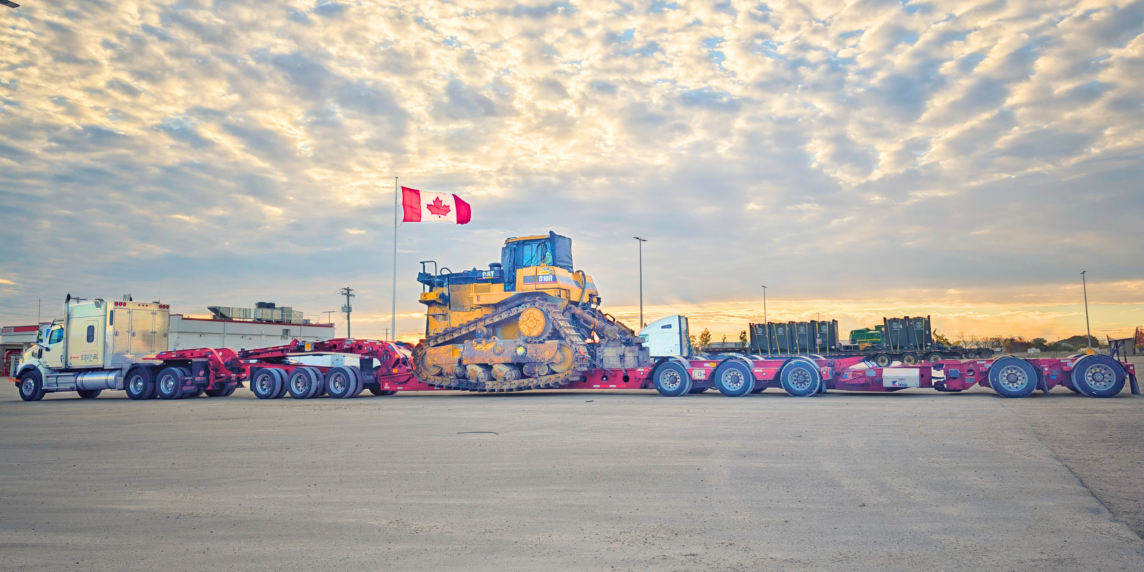
The trailers alone tell the story. A lowboy, a multi-axle perimeter frame, a removable gooseneck. None of these are variations on a standard flatdeck. They’re specialized pieces of equipment that require experienced operators and specific knowledge to use safely. A carrier who occasionally handles oversized freight and one who does it day in and day out are not the same thing, even if they show up with similar equipment on paper.

The Carrier Pool Is Smaller Than It Looks

Here’s something the industry doesn’t talk about enough: the number of carriers genuinely equipped and qualified to handle complex heavy haul moves in Western Canada is not large, and it has been shrinking.

The past few years have been hard on carriers across the board. A prolonged freight recession squeezed margins to the point where many operators exited the market entirely. Smaller fleets that couldn’t sustain those costs through lean periods either downsized or shut down. The carriers who made it through did so by being operationally sound, but the overall pool contracted.

At the same time, Canada has been tightening compliance standards across the industry. Alberta alone removed 13 commercial operators from service following enforcement audits that targeted unsafe equipment, poor on-road performance, and failure to meet mandatory safety standards. Federal crackdowns on driver misclassification removed additional operators who cut corners on training, licensing, and oversight. Both developments strengthen road safety and the integrity of the industry. But the short-term effect is a smaller pool of available capacity at exactly the moment when construction and industrial demand is ramping back up.

Add to that a genuine driver shortage. The Canada Trucking Operators Association reported earlier this year that some carriers are operating with up to a 15 percent shortfall in driver capacity. Statistics Canada recorded over 11,000 vacant positions for transport truck drivers in 2025 alone. For general freight, this creates delays and service pressure. For heavy haul, where drivers need specific experience and qualifications to operate safely, the shortage hits harder.

Not Every “Yes” Means They Can Actually Do It

This is where shippers run into trouble most often. When capacity is tight and a project timeline is pressing, it’s tempting to take the first carrier who confirms availability. The problem is that in heavy haul, a carrier who is willing to take your load and a carrier who is properly set up to move it are not always the same.

A load that exceeds legal weight or dimension limits requires the right permits for every province it travels through. It requires a route survey, not just a map. It may require escort vehicles, specific travel windows, and coordination with provincial authorities. If a carrier doesn’t have experience navigating those requirements, they either get the permits wrong, miss something in the routing, or both. Either way, the cost of those mistakes lands on your project, not theirs.

Equipment mismatches are another common issue. Using a trailer that only barely accommodates your load leaves no room for error. Showing up to a remote job site with the wrong configuration, or discovering mid-route that a bridge clearance or weight limit wasn’t properly accounted for, turns a straightforward delivery into a serious problem. These aren’t rare edge cases. They happen when shippers prioritize availability over capability.

What to Actually Look For in a Heavy Haul Carrier

Vetting a carrier before you commit doesn’t need to be complicated, but it does need to happen. A few things worth looking at:

Do they have the right equipment for your specific load? Not just a trailer that’s big enough, but the right configuration for the dimensions, weight, and delivery site requirements of your actual move. A good carrier will ask detailed questions about your load before quoting. If they don’t, that’s worth noting.

Do they have experience with the corridor and the type of freight? Moving an excavator between two job sites in central Alberta is a different job than delivering a modular structure to a remote site in northern BC. Regional knowledge matters. Understanding of access roads, bridge limits, and provincial permit nuances matters. Ask about moves they’ve done that are comparable to yours.

Do they handle permits in-house? Carriers who manage their own permit process tend to know exactly what’s required and when. If a carrier relies on a third party for every permit, or isn’t clear on the requirements upfront, that’s a gap in their operational knowledge that can slow down or derail your move.

Are they selective about what they take on? This one sounds counterintuitive, but it’s actually a good sign. Carriers who understand their own capabilities and turn down loads that aren’t a fit tend to be more trustworthy than ones who will say yes to anything and figure it out later. A carrier who asks hard questions and occasionally pushes back is one who takes execution seriously.

Relationships Matter More Than You Think

In a market where qualified heavy haul capacity is genuinely limited, the shippers who consistently get their freight moved on time aren’t always the ones with the biggest budgets. They’re the ones with established relationships.

Carriers who are selective about what they take on are also selective about who they work with. Shippers who communicate clearly, provide accurate load information, give reasonable lead time, and treat carriers as partners rather than vendors tend to be prioritized when capacity is tight. It isn’t personal, it’s operational. A shipper who has worked with the same carrier across multiple projects over several years creates a level of familiarity and trust that a one-time call simply can’t replicate.

That’s not to say you can’t get great service from a new carrier relationship. But building those relationships before you need them in a pinch is a lot easier than trying to establish credibility while your equipment is sitting in a yard waiting for a truck.

The Bottom Line

The heavy haul carrier market in Western Canada is more constrained than it appears from the outside. Fewer qualified operators, tighter compliance standards, a real driver shortage, and peak season demand all converging at the same time means that the assumption of easy availability is worth questioning.

The shippers who navigate this well are the ones who treat carrier selection as seriously as they treat any other part of their project planning. Know what your load actually needs. Ask the right questions. Build relationships before you need them. And give your carrier enough lead time to do the job properly, because in heavy haul, the quality of the execution depends entirely on the quality of the preparation behind it.

– –

ABOUT THE AUTHOR

DeVaughn McEwan – Inside Sales & Marketing Lead

DeVaughn McEwan, Inside Sales & Marketing Lead - Bowline Logistics

DeVaughn works across inside sales and content development at Bowline Logistics, where his focus with Bowline Insights is on making the complex world of heavy haul and oversized freight easier to understand. With a background spanning marketing, finance, and the transportation industry, he translates technical logistics into clear, real-world insights drawn from the work happening on the ground. If you’ve ever wished someone would just explain freight in plain language, that’s the goal.
0 0 Continue Reading →

Why Heavy Haul Freight Needs to Be Your First Call This Construction Season

Spring arrives in Western Canada and suddenly everyone is ready to move. Ground thaws, project budgets unlock, and job sites that sat quiet all winter come back to life almost overnight. For heavy haul freight, though, that same energy can be the start of your biggest headache of the year if the logistics side wasn’t planned ahead of time.

The window between road ban season and peak construction demand is short. In that window, specialized carriers, permits, and equipment all get competitive fast.

The Spring-Summer Surge Is Real, and It’s Getting Tighter

Construction season in Alberta and across Western Canada isn’t just a busy period for contractors. It’s the busiest time of year for heavy haul trucking, full stop. Mining operations that held off on equipment moves during winter and road ban season begin ramping up. Infrastructure projects break ground. Modular structures destined for remote sites, work camps, and glamping-style developments need to get moving before summer access windows close.

The challenge isn’t finding a truck. It’s finding the right truck, with the right trailer configuration, at the right time, and having all the permits, routing, and escort coordination locked in before your project timeline depends on it.

When shippers wait until the last minute, they run into one of two problems: they can’t find capacity at all, or they find capacity that isn’t properly equipped for the move, which creates compliance and safety issues down the line.

What “Planning Ahead” Actually Means for Heavy Haul

For standard freight, booking a week or two out is usually fine. Heavy haul doesn’t work that way.

Between the permit application process, route surveys, escort vehicle coordination, and equipment scheduling, a properly planned heavy haul move in Western Canada can take two to four weeks of lead time, sometimes more, depending on load dimensions, destination, and provincial requirements. For complex moves crossing municipal boundaries, heading into remote access areas, or involving multi-truck coordination, you need even more runway.

A few things worth building into your project schedule, keeping in mind that road conditions and weight restrictions across Alberta can shift quickly during this period::

Permit timelines vary by province and load type. Alberta, BC, and Saskatchewan each have their own thresholds, their own processes, and their own approval timelines. A move that’s straightforward in one province might trigger additional requirements the moment it crosses a border. Getting permits wrong or getting them late doesn’t just delay the truck. It can delay your entire project.

Routes need to be confirmed, not assumed. Spring construction season means active road work, temporary closures, and reduced load limits on secondary highways that are still recovering from the thaw. A route that was clean last fall may not be available in May. Your carrier should be doing route surveys and confirming current conditions before your freight ever rolls.

Escort vehicles and pilot cars are booked separately, and they fill up too. This is the piece that catches a lot of shippers off guard. Specialized carriers coordinate the truck, but escort and pilot car availability is its own constraint. During peak season, these resources get stretched. Planning early means you’re not scrambling at the last minute because your load is sitting in the yard waiting on a pilot car.

Construction Equipment Moves: More Common, More Complex

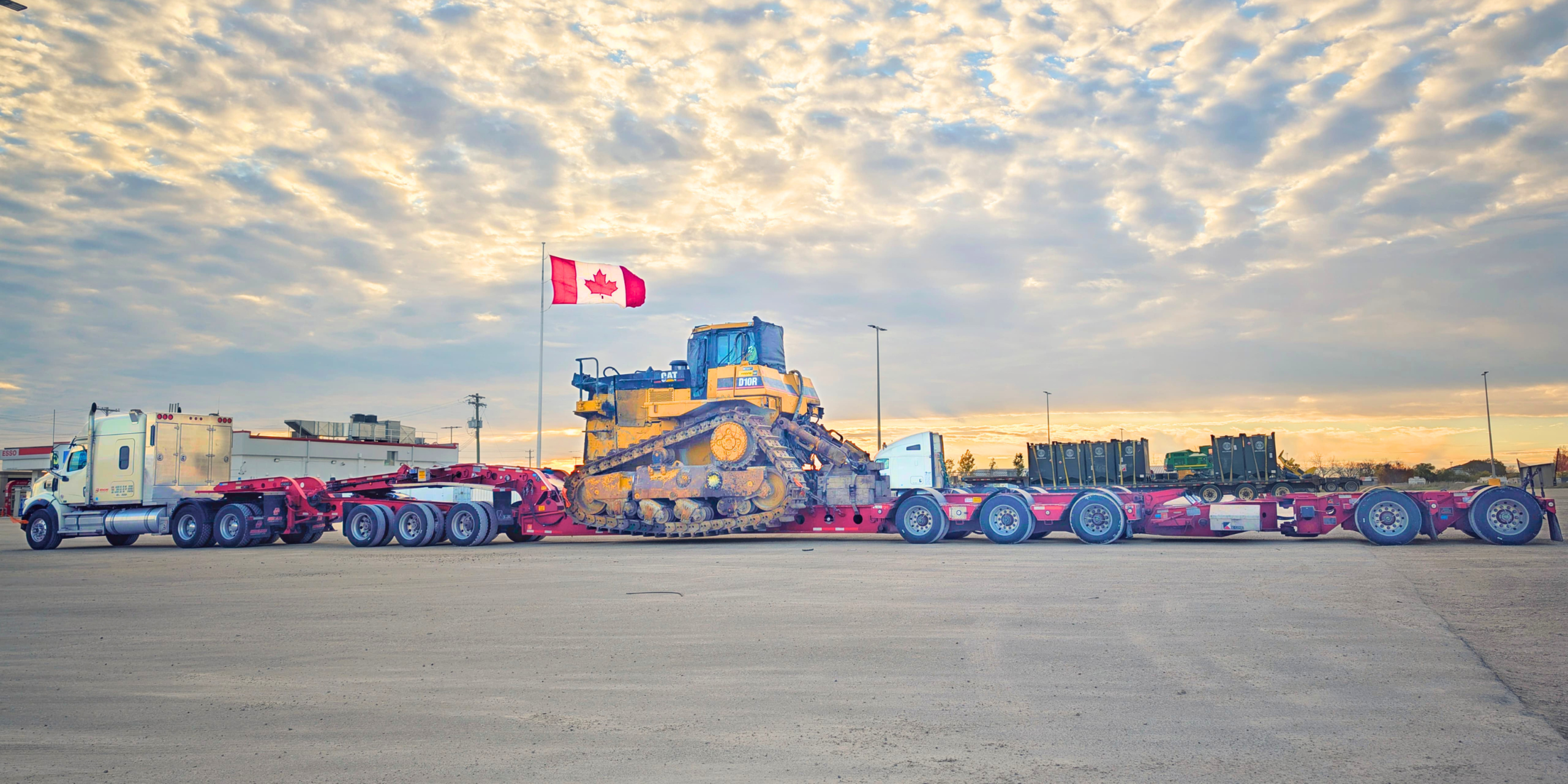
Some of the most time-sensitive heavy haul moves of the season are construction equipment relocations. Excavators, graders, crushers, and loaders don’t wait around. When a project needs them on site, the timeline is usually firm.

What makes these moves tricky is that construction equipment often travels on tight schedules between multiple active job sites. A machine might need to be off one site in northern Alberta and on another by a specific date. That kind of coordination requires more than just a flatdeck and a willing driver. It requires a carrier who understands how to sequence moves, handle loading and unloading at active sites, and communicate clearly when conditions change.

Equipment that self-loads, like excavators, needs the right trailer, typically a lowboy or step deck, and a site with enough clearance to make it work. Showing up with the wrong equipment is a half-day problem that nobody wants mid-season.

Modular and Specialty Structures: A Different Kind of Planning

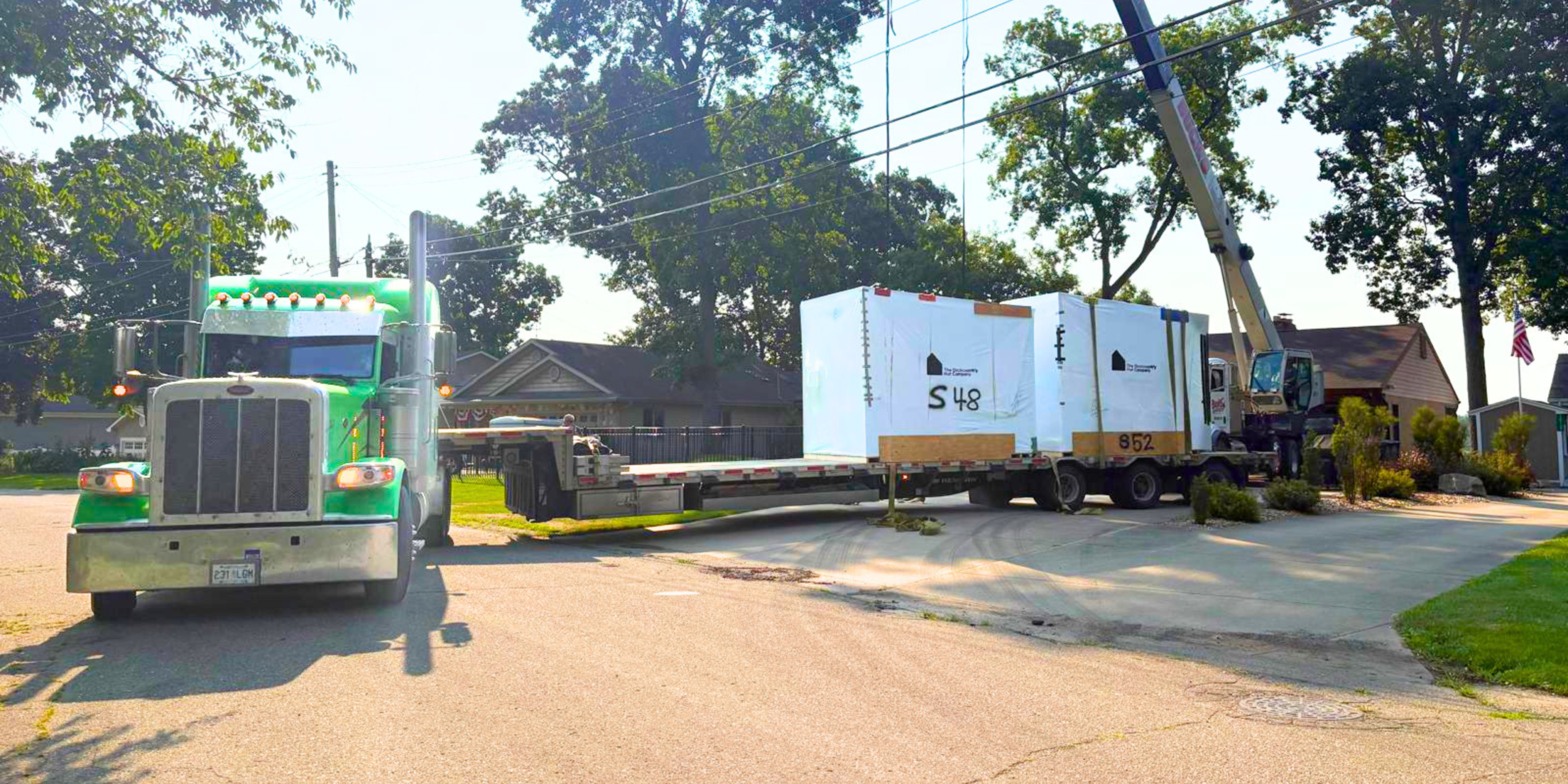
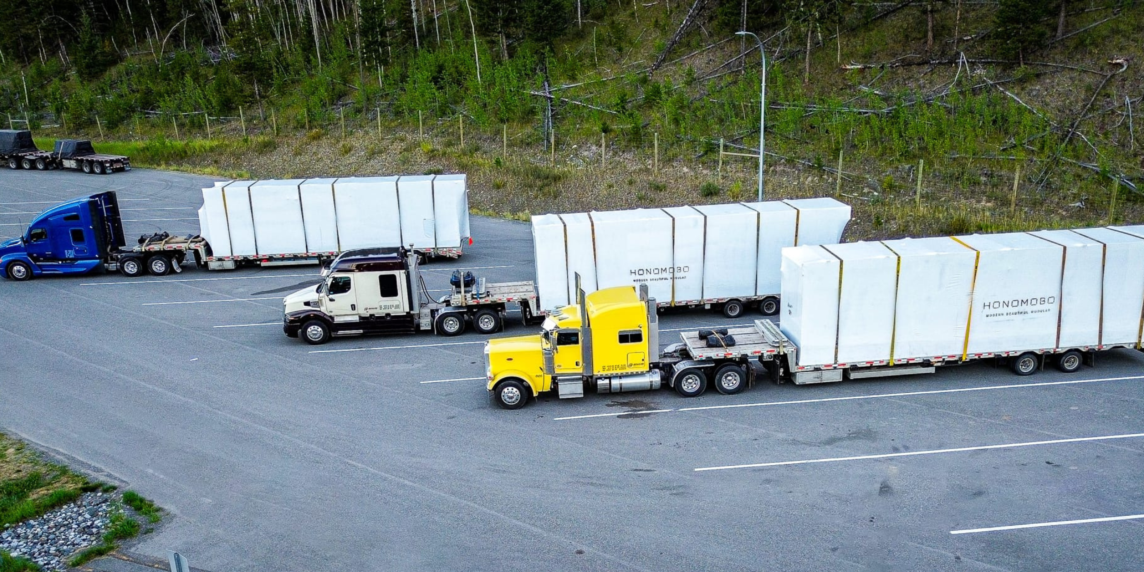
Beyond traditional construction equipment, modular deliveries have become a growing part of the spring and summer heavy haul picture across Western Canada. We’re not just talking about work camp trailers. The space has evolved significantly. Purpose-built cabin units, prefabricated structures for glamping developments, and architecturally designed modular homes are all moving through the region, and many of them require the same level of care as any other oversized freight.

These structures are different from equipment in one important way: they can’t take a hit. A piece of mining equipment is built to absorb punishment. A finished modular unit with interior walls, flooring, and window frames is not. Securing it correctly, choosing the right trailer, and routing around tight corners or low clearances is the whole job.

For these moves, the planning conversation needs to start at the design and manufacturing stage, not when the unit rolls out of the shop. Knowing the final dimensions, delivery site access, and any lifting or placement requirements ahead of time is what allows the transport plan to actually work when it counts.

Mining Season Adds Its Own Layer

For mining operations in northern Alberta and across the region, the seasonal ramp-up brings its own freight challenges. Remote access roads that were impassable or restricted all winter begin opening up, but they don’t all open at the same time, and they don’t all stay open indefinitely.

Moving heavy mining equipment to remote sites often requires multi-truck coordination and precise scheduling. Loaders, processors, and excavators frequently arrive in phases because they can’t all land at once, and the order of arrival matters for how crews deploy and set up on site. Getting that sequencing right is part of what separates a carrier who does this regularly from one who doesn’t.

Bridge weight limits on remote access routes are also a real constraint that gets overlooked until it becomes a problem. A thorough route survey, not just a map check, is what catches these issues before they stall a move your team has been planning for weeks.

The Simple Version: Call Early, Ship Smart

None of this is meant to make heavy haul sound impossibly complicated. Experienced carriers do this every season and they know how to make it work. But the single biggest factor in whether a spring or summer heavy haul move goes smoothly is lead time.

The earlier the conversation starts, the more options are on the table. Routes can be scouted properly. Permits can be submitted with time to spare. Equipment can be matched to the load, not just whatever’s available. And when something comes up, because something always comes up, there’s room to adapt without derailing the whole project.

If you’ve got heavy haul freight moving this construction season, the best time to start planning was last month. The second-best time is now. Get in touch with the Bowline team and let’s build a plan that works.

– –

ABOUT THE AUTHOR

DeVaughn McEwan – Inside Sales & Marketing Lead

DeVaughn McEwan, Inside Sales & Marketing Lead - Bowline Logistics

DeVaughn works across inside sales and content development at Bowline Logistics, where his focus with Bowline Insights is on making the complex world of heavy haul and oversized freight easier to understand. With a background spanning marketing, finance, and the transportation industry, he translates technical logistics into clear, real-world insights drawn from the work happening on the ground. If you’ve ever wished someone would just explain freight in plain language, that’s the goal.
0 0 Continue Reading →

How Modular Buildings Are Transported in Western Canada (And What Can Go Wrong)

Modular construction has become one of the fastest-growing building methods across Western Canada. Housing shortages, workforce accommodation needs, Indigenous community development, and remote infrastructure projects are all driving demand for prefabricated and modular structures that can be built faster and with more predictable timelines than traditional construction.

But while modular construction simplifies the build process, transporting a completed modular building is often the most technically challenging part of the project. These structures are not raw materials or standard equipment. They are finished, or nearly finished buildings, that must arrive intact, on schedule, and ready for installation.

Understanding how modular buildings are transported, and where projects can go wrong, is essential for anyone planning a modular build in Western Canada.

What Modular Building Transport Actually Involves

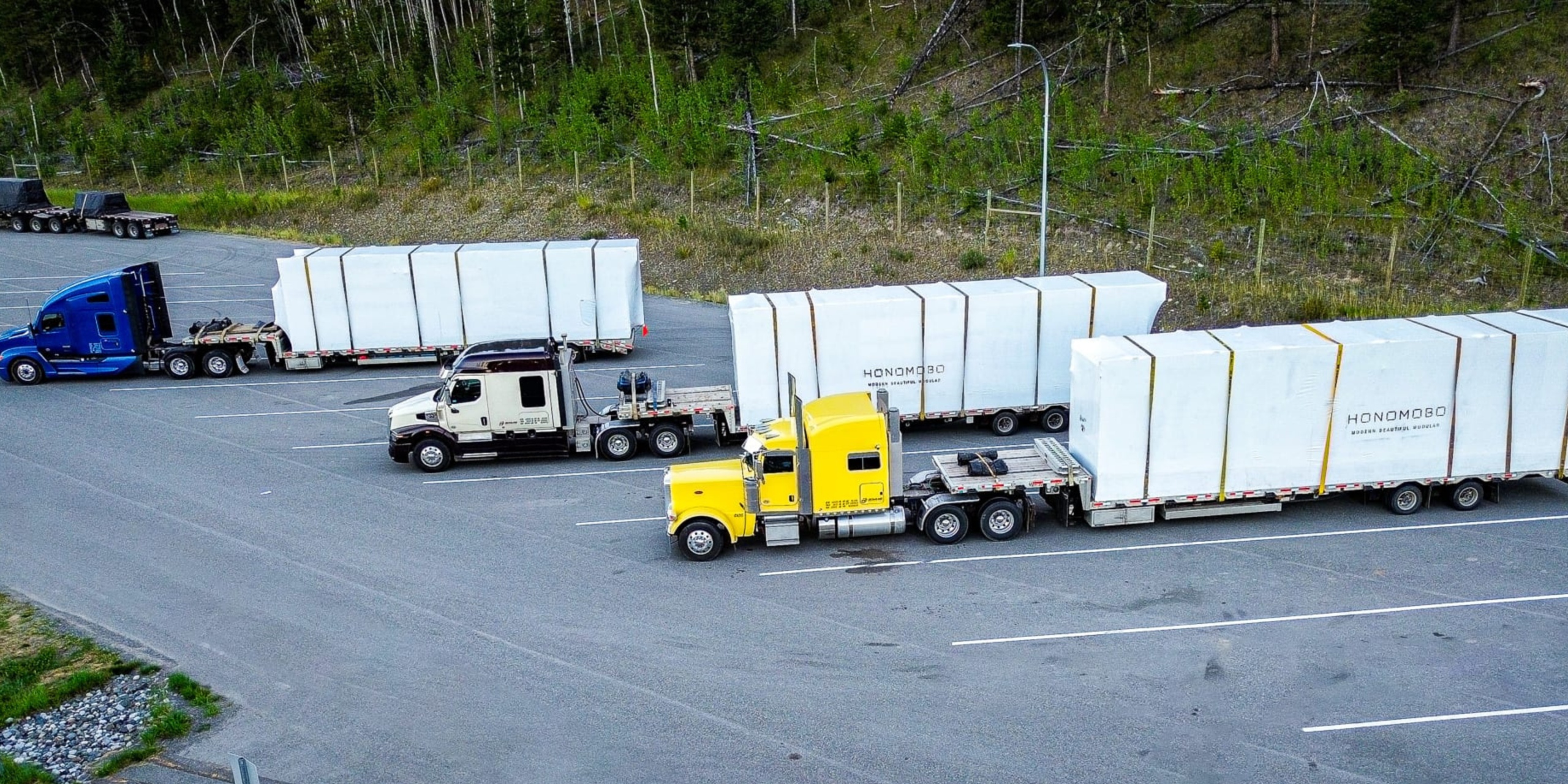
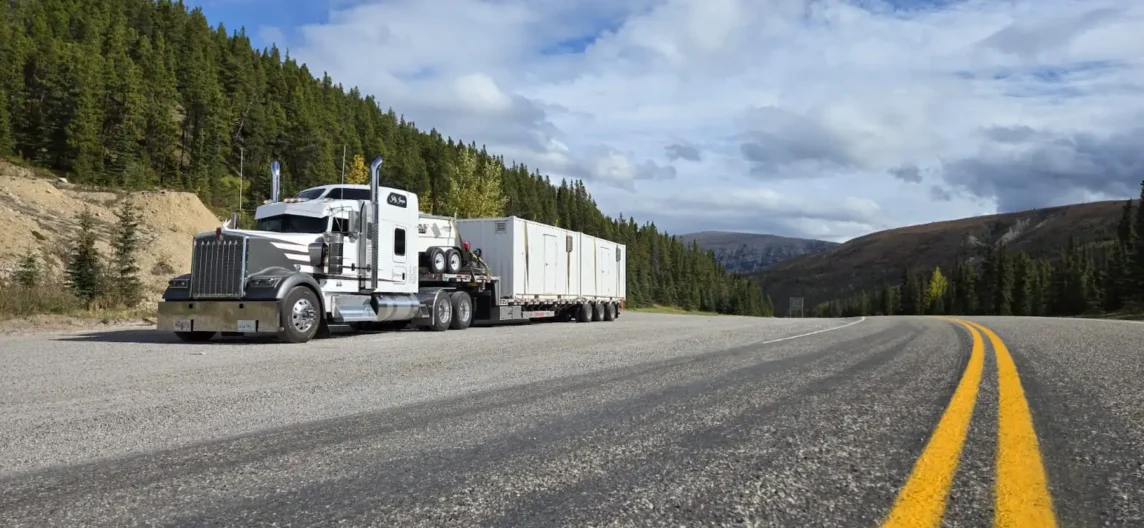
Modular building transport refers to the movement of fully or partially completed building sections from a manufacturing facility to their final destination. These modules can range from single-unit structures to multi-section buildings that are assembled on site.

Unlike conventional freight, modular buildings are rigid, oversized, and often fragile relative to their size. Once a module is completed, it cannot be disassembled or easily adjusted to suit transportation constraints. That means the transport plan must work around the building, not the other way around.

In many cases, modular buildings exceed legal width or height limits, placing them firmly in the category of oversize or heavy haul transport. This introduces additional requirements around permits, routing, escort vehicles, and scheduling that must be addressed well before the move takes place.

Why Modular Building Transport Is More Complex Than It Appears

From the outside, modular building transport can look deceptively simple. The structure is loaded onto a trailer, secured, and delivered to site. In reality, every stage of the move introduces risk if it is not properly planned.

One of the biggest challenges is dimensional sensitivity. Width and height are often more restrictive than weight, particularly when navigating highways, secondary roads, or urban areas. Overhead power lines, signage, bridge clearances, and tight intersections can all limit viable routes.

There is also the issue of structural stress. Modular buildings are engineered to perform once installed, not to absorb uncontrolled flex during long-distance transport. Improper securement, uneven weight distribution, or excessive vibration can cause damage that may not be immediately visible but can delay installation or require costly repairs.

Environmental exposure adds another layer of complexity. Large, flat surfaces increase wind resistance, especially at highway speeds, making stability a critical concern. Weather conditions, road surfaces, and seasonal restrictions all influence how and when a modular building can be moved safely.

Why Route Planning Determines Success or Failure

For modular building projects, route planning is not a formality, it is a determining factor in whether the move succeeds.

A proper route analysis evaluates far more than distance. It considers bridge capacities, overhead clearances, turning radiuses, road grades, construction zones, and temporary restrictions that may not appear on standard mapping tools. In many cases, route surveys are required to physically verify clearances and identify potential conflicts in advance.

In Western Canada, seasonal weight restrictions can further complicate planning, particularly for rural and remote destinations. A route that works in summer may be completely unavailable during spring thaw or winter conditions.

When route planning is rushed or overlooked, the result is often last-minute changes, permit issues, or delays that ripple through the entire project schedule. Experienced carriers treat routing as a core part of the service, not an afterthought.

Permits and Escort Vehicles in Western Canada

Because modular buildings frequently exceed legal transport dimensions, permits and escort vehicles are almost always required. These requirements vary by province and are influenced by the size of the load, the selected route, and the timing of the move.

Permits define where, when, and how a modular building can be transported. They may include restrictions on travel times, speed limits, or specific route approvals. Escort vehicles are often mandated to manage traffic, assist with lane control, and provide advance warning to other road users.

Navigating permit requirements across Alberta, Saskatchewan, and British Columbia requires familiarity with provincial regulations and approval timelines. Delays at this stage can stall projects before transport even begins, making early coordination essential.

Common Mistakes That Delay Modular Building Projects

Many transport issues don’t show up until it’s too late. The most common problems seen in modular building transport include:

1. Choosing a carrier without modular experience
Not all heavy haul carriers understand the structural nuances of modular units. Experience with equipment alone is not enough.

2. Underestimating escorts and permits
Assuming a route will “probably be fine” often leads to last-minute changes and added costs.

3. Poor load securement planning
Incorrect securement can cause stress points, shifting, or damage during transport.

4. No contingency planning
Weather, road conditions, or access delays need backup plans, especially for remote sites.

These mistakes are avoidable with proper planning and the right transport partner.

Choosing Between Heavy Haul and Open Deck Solutions

Not all modular building projects require the same transport approach. The choice between heavy haul and open deck solutions depends on several factors, including the size of the module, route constraints, and distance traveled.

Heavy haul configurations are typically required when modular buildings exceed standard width or height limits, require specialized axle setups for weight distribution, or are transported over long distances. These setups provide greater stability and control, particularly for oversized loads.

Open deck solutions may be appropriate for smaller modular components or shorter hauls where route constraints are limited. However, using open deck equipment for a move that truly requires heavy haul support can introduce unnecessary risk and permitting challenges.

Understanding the distinction early helps ensure the right equipment is used from the outset.

Transporting Modular Buildings to Remote and Rural Locations

Many modular buildings in Western Canada are destined for remote communities, energy projects, or rural developments where traditional construction is impractical. These deliveries introduce additional logistical considerations beyond the move itself.

Access roads may be narrow or unpaved, staging areas limited, and crane availability tightly scheduled. In these environments, timing is critical. A modular building that arrives too early can create storage issues, while delays can idle installation crews and equipment.

Successful delivery to remote sites requires coordination between the transport provider, manufacturer, and on-site teams to align schedules and ensure site readiness.

How Experienced Carriers Approach Modular Building Transport

The most successful modular building moves begin long before the structure is loaded onto a trailer. Experienced carriers engage early in the planning process, working alongside project teams to identify constraints and develop realistic transport strategies.

This approach typically includes early route analysis, permit coordination, equipment selection based on module dimensions, and clear communication with both the manufacturer and installation crews. On-site coordination during delivery ensures the building can be placed efficiently and safely.

That kind of early engagement is what keeps a modular project on track when the unexpected happens.

Why Transport Planning Should Start on Day One

In modular construction, transport is often treated as the final step. In practice, it should be part of the initial project conversation. Early planning allows potential issues to be identified while design adjustments are still possible and timelines remain flexible.

By integrating transport considerations early, project owners can control costs, reduce delays, and improve coordination across all phases of the build.

Strengthening Modular Building Transport Across Western Canada

As modular construction continues to expand across Alberta and Western Canada, transportation has become the critical link between manufacturing and successful installation. Modular projects depend on precise coordination, predictable execution, and carriers who understand what they’re actually moving. These are fully engineered structures with tight delivery windows and real financial consequences if something goes wrong.

For developers, manufacturers, and project managers, delays or damage during transport can ripple through the entire build schedule. That’s why modular building transport requires logistics partners who understand regional infrastructure, permitting realities, route constraints, and on-site coordination, not just the movement itself.

If you have a modular project coming up and want to talk through the transport side early, get in touch with the Bowline team.

ABOUT THE AUTHOR

DeVaughn McEwan – Inside Sales & Marketing Lead

DeVaughn McEwan, Inside Sales & Marketing Lead - Bowline Logistics

DeVaughn works across inside sales and content development at Bowline Logistics, where his focus with Bowline Insights is on making the complex world of heavy haul and oversized freight easier to understand. With a background spanning marketing, finance, and the transportation industry, he translates technical logistics into clear, real-world insights drawn from the work happening on the ground. If you’ve ever wished someone would just explain freight in plain language, that’s the goal.
1 0 Continue Reading →

Finally, A Trusted and Reliable Trucking Company in Canada

Transportation can feel like a transactional industry. A load gets booked, a truck shows up, and the relationship ends at the delivery point. At Bowline Logistics, the goal has always been something different: move freight reliably, communicate honestly, and build working relationships that hold up over time.

That’s the idea behind the tagline: “When reliability matters most.”

Long-Term Transportation Relationships Across Canada and the USA

In practice, in an industry where speed often overshadows service, Bowline focuses on the long game. Rather than chasing one-time transactions, the team works to understand each client’s business well enough to anticipate what they need before they ask. From major cities like Edmonton, Calgary, and Vancouver to remote delivery points, the goal is to be a carrier clients call back, not just a vendor they found once.

That means taking the time to understand how a business actually operates, where the pressure points are, and what a logistics partner needs to do to make things run smoother rather than harder.

Trusted Transportation Services Backed by a Dedicated Team

Bowline’s team brings real experience in the transportation industry. The team plans, tracks, and delivers each load with attention to the details that matter, because in freight, the details are where things go wrong.

That commitment shows up in how the team approaches safety standards and compliance. As a result, the team handles every oversized freight job with the care that kind of work requires, not just to meet regulatory requirements, but because getting it right is the whole point.

Trucking Solutions for FTL, LTL, and Long-Haul Freight

Whether you’re shipping full truckloads (FTL), less than truckload (LTL), or need long-haul capacity across provinces or international borders, Bowline has the fleet and experience to make it work. The trucks are well-maintained, the route planning is thorough, and the focus is on keeping freight moving without unnecessary complications.

As businesses navigate rising transportation costs, the goal is to offer options that are practical and cost-effective without cutting corners on how the work gets done.

Cross-Border and North American Freight Transportation

Cross-border shipping between Canada and the U.S. adds layers of complexity around documentation, compliance, and timing. Bowline handles that coordination as part of the job, not as an afterthought. For businesses moving freight across North America, having a carrier who understands what border crossings actually require makes a real operational difference.

Whether the destination is a warehouse in Ontario or a distributor in California, Bowline’s carrier network and support team are set up to make cross-border moves straightforward rather than stressful.

Transportation Solutions to Meet Every Shipping Need

Bowline’s full-service model is built to support different kinds of freight needs across the supply chain. The range of services includes:

  • FTL and LTL freight shipping
  • Cross-country and cross-border deliveries
  • Local and long-haul trucking across Canada
  • Intermodal freight coordination
  • Strategic freight shipping and specialized equipment transport
  • Inventory staging, warehousing, and real-time tracking

Supply Chain Expertise

Transportation decisions have downstream effects. How freight moves affects warehousing, retail schedules, and what a business is ultimately able to deliver to its own customers. Bowline approaches logistics with that broader picture in mind, providing visibility, proactive communication, and planning that reduces friction rather than adding to it.

Real-time tracking, responsive support, and honest communication aren’t extras. In fact, they’re how the work is supposed to get done.

Scalable Freight Solutions

Bowline works with businesses of different sizes, from smaller operations to national distributors. The approach is the same regardless of scale: understand what the job actually needs, match the right resources to it, and execute without unnecessary complications.

Whether a business is launching something new or expanding its reach across the country, the logistics side of that growth doesn’t have to be the hard part.

Driving Customer Satisfaction and Repeat Business

A lot of Bowline’s clients have been working with the team for years. That retention reflects something straightforward: on-time delivery, transparent pricing, and consistent follow-through. When a carrier helps a shipper deliver on their own promises to their customers, the relationship tends to hold.

That level of responsibility requires consistency and communication, not just trucks and drivers.

When Reliability Matters Most

The transportation industry has no shortage of options. What’s harder to find is a carrier that shows up consistently, communicates clearly, and treats each job as if the outcome actually matters to them. That’s what Bowline is built around.

If you’re looking for a freight partner with cross-border reach, long-haul capability, and a team that takes the work seriously, that’s the right place to start.

Bowline Logistics. When reliability matters most.

– –

ABOUT THE AUTHOR

DeVaughn McEwan, Inside Sales & Marketing, Bowline Logistics

DeVaughn McEwan, Inside Sales & Marketing Lead - Bowline Logistics

DeVaughn works across inside sales and content development at Bowline Logistics, where his focus is on making the complex world of heavy haul and oversized freight easier to understand. With a background spanning marketing, finance, and the transportation industry, he translates technical logistics into clear, real-world insights drawn from the work happening on the ground. If you’ve ever wished someone would just explain freight in plain language, that’s the goal.

0 Continue Reading →