Skip to Content

Blog Archives

Energy Equipment Transport in Western Canada: Before the Power Flows, the Equipment Has to Get There

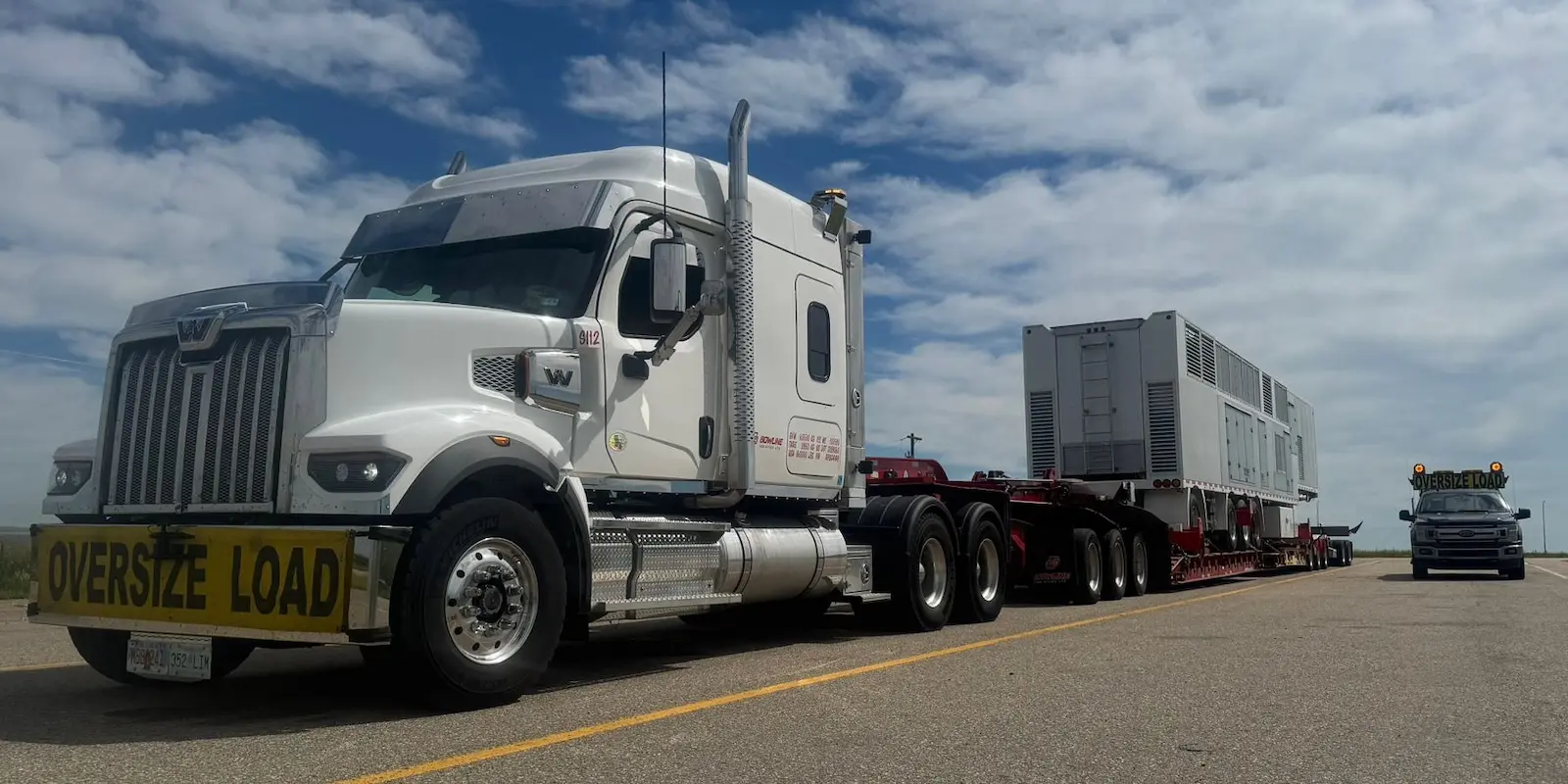
Energy equipment transport in Western Canada is one of the most demanding and specialized freight challenges on the continent. Oil and gas operations stretch across northern Alberta and northeastern BC. Wind farms are expanding across the prairies. Substations, transformers, and transmission infrastructure are being built and upgraded at a pace that reflects the scale of energy investment happening across the region. Canada’s energy sector accounted for nearly 10 percent of the country’s GDP in 2024, with capital expenditures in the sector totalling $89 billion that same year.

None of that happens without the equipment getting there first. And getting it there is a lot more complicated than it looks from the outside.

The Equipment That Powers the Energy Sector Is Not Small

Before a wind turbine turns a single rotation, its components have to travel from a manufacturer or port to a site that is often remote, accessed by roads not designed for oversized loads, and operating on a construction schedule that can’t easily accommodate delays.

Wind turbine blades alone regularly exceed 60 to 70 metres in length. Nacelles, the housing units that sit atop the tower and contain the generator and gearbox, can weigh over 100 tonnes. Tower sections, rotor hubs, and foundations all require separate moves, separate permits, and separate coordination. A single wind turbine installation can represent a dozen or more individual heavy haul shipments before the first bolt is tightened on site.

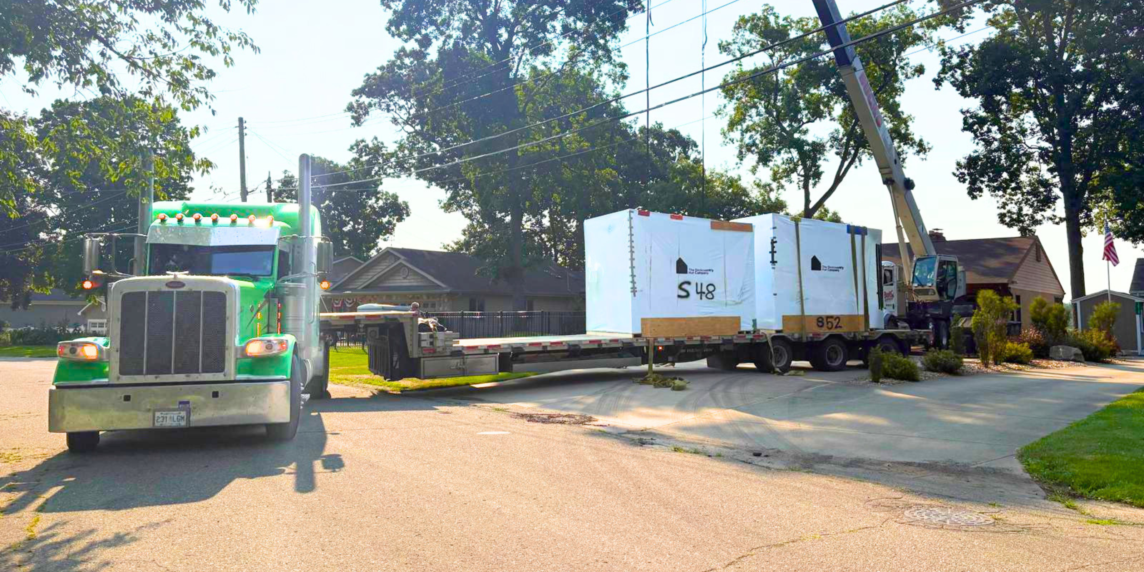
Electrical transformers present a different kind of challenge. Some of the largest units weigh several hundred tonnes and are among the most difficult loads to move on public roads anywhere in North America. They’re also irreplaceable in any practical sense. Lead times for replacement units can run to over a year, which means a damaged transformer isn’t just a logistics problem. It’s a project-ending event. The pressure to move them without incident is real, and it demands a level of planning and expertise that goes well beyond standard freight.

Oil and Gas Infrastructure Has Its Own Demands

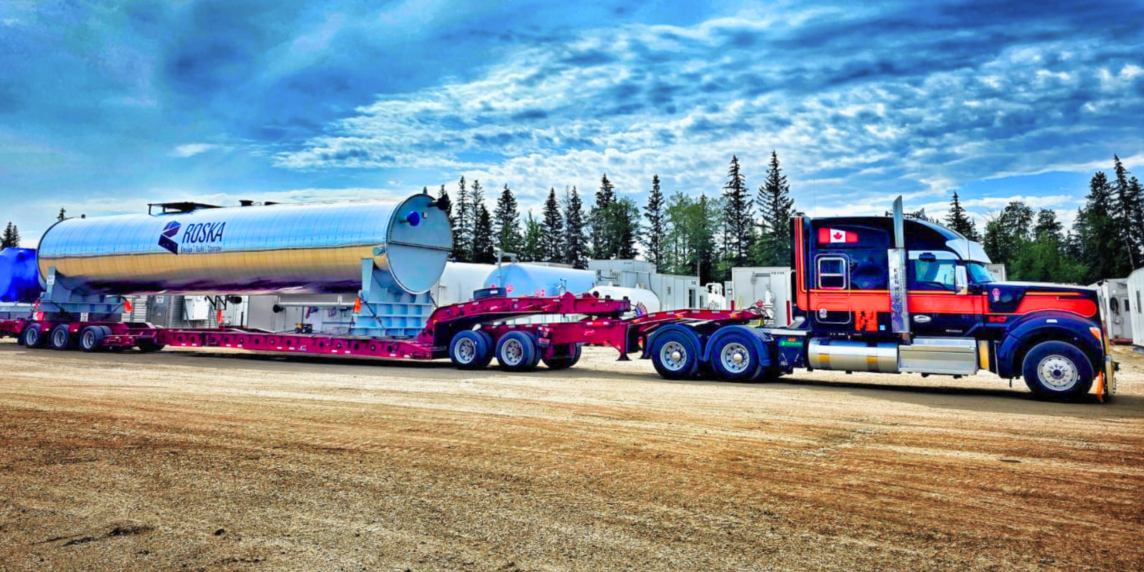
Alberta’s oil and gas sector has always been one of the primary drivers of heavy haul freight in Western Canada, and that hasn’t changed. Oilfield skids, processing equipment, pressure vessels, and modular e-houses all need to move from fabrication facilities to remote well pads and processing sites, often along access roads that were built for functional access rather than oversized freight.

What’s notable about oil and gas freight is how time-sensitive it tends to be. Production schedules and well completion timelines are built around equipment arriving when it’s supposed to. A compressor or separator that misses its delivery window doesn’t just sit on a truck. It idles a crew, delays a completion, and generates costs that compound quickly. That kind of pressure puts a premium on carriers who plan thoroughly and communicate clearly rather than ones who just show up and hope for the best.

The sector also generates a significant volume of cross-border freight. Equipment manufactured in the United States moves north into Alberta regularly, and Canadian fabricated components move south. Managing that flow requires bonded carrier status, familiarity with customs documentation, and experience coordinating permits across multiple jurisdictions simultaneously.

Renewable Energy Is Raising the Bar on Complexity

The growth of renewable energy development across Western Canada has added a new layer of complexity to energy sector freight. Wind projects, solar installations, battery energy storage systems, and substation upgrades are all generating demand for specialized transport that didn’t exist at this scale even a decade ago.

Wind energy in particular has pushed the boundaries of what heavy haul transport is required to do. Blade transport requires extendable trailers purpose-built for the job, and route planning for a wind farm project often involves months of advance work. Access roads may need to be surveyed, modified, or temporarily reinforced. Municipal and provincial approvals can be required at multiple points along the route. In some cases, utility lines need to be temporarily lifted to allow a load to pass beneath them, which requires coordination with power companies on top of everything else.

Battery energy storage systems and modular substation components are becoming increasingly common freight for the energy sector as well. These loads require careful handling and securement given their sensitivity, and delivery timing is often tied directly to grid connection schedules and commissioning windows that can’t slip.

Remote Access Is the Variable That Changes Everything

One of the defining characteristics of energy sector freight in Western Canada is that so much of it ends up somewhere remote. Oil sands operations in northern Alberta. Wind farms on the open prairie far from major highways. Hydroelectric and transmission projects deep in the BC interior. The equipment has to get there regardless of what the access looks like.

Remote delivery adds layers that don’t exist on a standard industrial move. Access roads may not be rated for the weights involved, requiring bridge analyses and engineering assessments before the truck ever leaves the yard. Staging areas at the delivery site may be limited, which affects sequencing and timing. Crane availability at the destination often determines exactly when a load can arrive, meaning the truck isn’t just moving freight. It’s fitting into a carefully choreographed site operation.

This is where the difference between a carrier with genuine project experience and one without it becomes most visible. Getting a load to a remote energy site on time and intact isn’t just about the drive. It’s about everything that was planned, confirmed, and coordinated in the weeks before the wheels turned.

Timing Is Everything When a Project Is Running

Energy infrastructure projects run on tight schedules. Construction crews, crane operators, installation teams, and commissioning engineers are often on site at significant daily cost. When freight is late, people wait. And when the equipment being delivered is part of a critical path item on the project schedule, a day’s delay can cascade into far larger disruptions.

Carriers who work regularly in the energy sector understand that a confirmed delivery window isn’t a suggestion. It’s a commitment that a series of other people and resources are built around. That reality shapes how experienced carriers approach energy freight differently from general cargo. Route contingencies are identified in advance. Weather windows are monitored. Communication with the site team happens proactively rather than reactively.

For project cargo that involves multiple components delivered in sequence, that coordination becomes even more critical. Seasonal factors like road bans can affect the timing of individual deliveries within a larger project sequence, which means the logistics plan has to account for variability and build in the flexibility to adapt without losing the overall timeline.

What Good Energy Sector Logistics Actually Looks Like

The energy sector doesn’t reward carriers who figure things out as they go. The complexity, the stakes, and the remoteness of so many energy projects demand a planning-first approach where every variable is identified and addressed before departure, not after something goes wrong.

That means thorough route surveys rather than map checks. Permit applications submitted with enough lead time to handle unexpected requirements. Equipment matched precisely to the load, not selected based on availability. And communication with project teams that is consistent and proactive rather than reactive.

Western Canada’s energy infrastructure is being built, upgraded, and expanded at a scale that requires reliable specialized transport at every stage. The equipment that goes into that infrastructure is expensive, hard to replace, and needed on a schedule. Getting it there safely and on time isn’t a logistical footnote. It’s what makes the project possible.

– –

ABOUT THE AUTHOR

DeVaughn McEwan – Inside Sales & Marketing Lead

DeVaughn McEwan, Inside Sales & Marketing Lead - Bowline Logistics

DeVaughn works across inside sales and content development at Bowline Logistics, where his focus with Bowline Insights is on making the complex world of heavy haul and oversized freight easier to understand. With a background spanning marketing, finance, and the transportation industry, he translates technical logistics into clear, real-world insights drawn from the work happening on the ground. If you’ve ever wished someone would just explain freight in plain language, that’s the goal.
0 0 Continue Reading →

What Does It Actually Cost To Move Freight In Western Canada?

If you’ve ever called a trucking company for a quote and wondered why the number came back so different from what you expected, you’re not alone. Freight pricing in Western Canada is one of those things that looks simple from the outside and gets complicated fast the moment you actually need to move something.

There’s no universal rate card. There’s no standard price per kilometre that applies across the board. What you pay to move freight depends on a combination of factors that shift depending on what you’re moving, where it’s going, what equipment it needs, and what the market is doing at the time you’re asking. Understanding those factors won’t give you a fixed number, but it will help you understand why quotes come in the way they do and what you can actually do about it.

Distance Is a Starting Point, Not the Whole Story

Distance is the most obvious factor in any freight quote and also the most misunderstood. Longer hauls generally cost more in total, but the rate per kilometre often drops as distance increases. A short move of 200 kilometres can end up costing more per kilometre than a 1,500-kilometre cross-provincial run, simply because carriers have to cover fixed costs regardless of how far they travel.

Remote and rural destinations add another layer. A delivery to a job site outside of Fort McMurray or a mine site in northern British Columbia involves roads that take longer to navigate, access points that require extra coordination, and in some cases equipment that simply isn’t available at the other end if something goes wrong. All of that factors into the rate. Moving freight between two major urban centres and moving it to a remote industrial site are fundamentally different jobs, even if the kilometres look similar on a map.

What You’re Moving Changes Everything

The nature of the freight itself has as much impact on pricing as distance. A flatdeck load of steel pipe moves very differently from a mining excavator, a wind turbine component, or a finished modular building. The more specialized the freight, the more specialized the equipment and expertise required, and that is reflected in the price.

For standard open deck or LTL freight, pricing tends to be more predictable. Weight, dimensions, and commodity type drive the calculation, and rates are relatively consistent across carriers who operate that equipment.

Once you move into heavy haul or oversized territory, the variables multiply. Loads that exceed legal weight or dimension limits require permits, route surveys, escort vehicles, and in some cases bridge analyses or municipal approvals. Each of those elements adds cost, and none of them are optional. A carrier quoting you on a heavy haul move who isn’t accounting for all of those components isn’t giving you a real number.

Equipment Type and Availability

The trailer required for your freight is one of the bigger cost drivers that shippers often don’t fully account for. A standard flatdeck is widely available and competitively priced. A 13-axle RGN capable of moving 165,000 lbs is a much more specialized piece of equipment with far fewer operators in the market.

Bowline’s fleet runs everything from low-pro step decks to extendable double-drop trombones and heavy RGN configurations, which means the right equipment is typically available rather than having to broker it out. But across the industry, specialized trailer availability is genuinely limited, and when demand peaks in spring and summer, competition for that equipment drives pricing up. If you need a specific trailer configuration for a specific window, lead time is your best cost-control tool.

Fuel Surcharges Are Real and They Move

Fuel surcharges are a standard component of any freight quote in Canada, and they’re not a padding exercise. They exist because diesel prices are volatile and carriers can’t absorb sudden swings in operating costs without passing some of that along.

In Q1 2026, Canadian diesel prices climbed close to 30 percent in a matter of weeks following disruptions to global oil supply, reaching levels not seen since 2022. Fuel surcharges are typically indexed to prior-period diesel prices, which means they lag behind sudden spikes. When prices jump fast, that gap has to land somewhere in the supply chain. Understanding that fuel surcharges are a variable, not a fixed fee, helps when you’re budgeting a project that spans several months.

Permits, Escorts, and the Costs of Compliance

For oversized and overweight freight, permits are a real cost that gets underestimated more often than not. Each province has its own permitting requirements, thresholds, and approval timelines. A multi-provincial move can require separate permit applications in each jurisdiction, and the cost and time involved varies significantly depending on load dimensions and route.

Escort vehicles and pilot cars are typically coordinated and billed separately from the truck itself. Depending on load size and route requirements, a single move might require one front escort, one rear escort, or multiple pilot vehicles at different points along the route. That coordination has a cost, and it’s a legitimate one. A carrier who isn’t building this into a quote on an oversized move either hasn’t thought it through or is planning to surprise you with it later.

Timing and Seasonality

When you need to move freight matters almost as much as what you’re moving. Western Canada’s freight market has real seasonal patterns. Spring and summer are peak periods for construction, mining, and project cargo, which means demand for specialized equipment is at its highest and capacity is at its tightest. Rates reflect that.

Spring road ban season also affects routing and timing in ways that can add cost. Loads that would move efficiently in winter or late summer may need to be rerouted, split, or delayed during the thaw period. Shippers who factor seasonality into their planning and book early tend to get better pricing and more flexibility. Those who call in peak season looking for a truck next week are negotiating from a weaker position.

LTL vs FTL: Picking the Right Option

For freight that doesn’t fill an entire trailer, less-than-truckload shipping consolidates your load with others heading in the same direction. It’s typically more cost-effective for smaller shipments, but it comes with less control over timing and sequencing. If your freight is time-sensitive or needs to arrive in a specific order relative to other project deliveries, LTL may not be the right fit even if the price looks better on paper.

Full truckload gives you the trailer and its departure time. You’re paying for dedicated capacity, but in return you get more predictability and direct routing. For industrial clients with project-critical deliveries, that predictability is often worth the premium. The break-even point between LTL and FTL typically sits somewhere around 10 to 12 pallets or roughly 50 percent of a trailer, though that calculation shifts depending on freight type and urgency.

Storage and Transloading Add Flexibility, Not Just Cost

Not every freight move is a straight line from origin to destination. Industrial projects often involve staged deliveries, install windows that aren’t confirmed until close to the date, and freight that arrives before a site is ready to receive it. Storage and transloading services allow freight to be held, repositioned, and redistributed without sitting on a truck or creating expensive delays on a job site.

Bowline operates 5-acre fenced and monitored yards in Spruce Grove and Regina, which means freight moving through those corridors can be staged and managed as part of the overall project rather than as a standalone shipment. For multi-phase projects, that flexibility is a real value, not just a line item.

What the Market Is Doing Right Now

Freight pricing doesn’t exist in a vacuum. The broader market affects what carriers charge, what capacity is available, and how much room there is to negotiate. Coming out of a prolonged freight recession that squeezed carrier margins for the better part of two years, the market in Western Canada is showing early signs of a turn. Spot rates hit a cycle high in early 2026 and capacity is beginning to tighten, particularly on specialized and heavy haul equipment. That trend is expected to continue through the back half of 2026.

What that means practically is that shippers who locked in relationships and contract pricing during the softer market are in a better position than those entering the market fresh right now. It also reinforces the value of planning ahead. When capacity tightens, the shippers with established carrier relationships and realistic lead times consistently get better outcomes than those relying on the spot market.

The Honest Answer on Pricing

There is no single answer to what it costs to move freight in Western Canada, because no two moves are exactly alike. Distance, freight type, equipment requirements, permits, seasonality, and market conditions all play a role. What a good carrier can do is be transparent about which of those factors apply to your move and why the quote reflects what it does.

If a quote comes back without any explanation of what’s driving it, that’s worth asking about. And if a quote comes back significantly lower than everything else you’ve received, it’s worth asking what’s been left out.

– –

ABOUT THE AUTHOR

DeVaughn McEwan – Inside Sales & Marketing Lead

DeVaughn McEwan, Inside Sales & Marketing Lead - Bowline Logistics

DeVaughn works across inside sales and content development at Bowline Logistics, where his focus with Bowline Insights is on making the complex world of heavy haul and oversized freight easier to understand. With a background spanning marketing, finance, and the transportation industry, he translates technical logistics into clear, real-world insights drawn from the work happening on the ground. If you’ve ever wished someone would just explain freight in plain language, that’s the goal.
0 0 Continue Reading →

Spring Road Bans in Western Canada: How They Impact Heavy Haul Freight

Every year, spring road bans quietly change how freight moves across Western Canada.

As temperatures rise and frost begins to leave the ground, road conditions shift. What looks like a normal highway can no longer support the same weight it could just weeks earlier. For heavy haul and oversized freight, that changes everything.

If road bans aren’t factored into planning early, delays, rework, and unexpected costs can follow quickly.

What Are Spring Road Bans?

Spring road bans, also known as seasonal weight restrictions, are put in place to protect road infrastructure during the thaw.

As the ground softens, roads become more vulnerable to damage under heavy loads. To prevent long-term deterioration, provinces reduce the allowable weight on certain highways, especially secondary and rural routes.

Across Alberta, British Columbia, and Saskatchewan, these restrictions typically come into effect in early spring, though exact timing varies depending on weather and ground conditions.

Where Road Bans Have the Biggest Impact

For standard freight, road bans can be manageable.

For heavy haul and oversized loads, they create real limitations.

The biggest impact is usually felt on:

  • Secondary highways and rural roads
  • Access routes leading to job sites
  • Areas with limited alternate routing options

While major highways may remain less restricted, getting freight to its final destination often requires traveling on roads that are affected by reduced weight limits.

That’s where planning becomes critical.

What Actually Changes for Heavy Haul Freight

When road bans are in effect, the rules around weight and configuration change immediately.

For heavy haul moves, that can mean:

  • Reduced allowable axle weights
  • Changes to trailer configurations
  • Splitting loads that would normally move in one piece
  • Delaying shipments until restrictions are lifted

In some cases, a load that was fully compliant in winter conditions is no longer legal to move on the same route in spring.

This isn’t just a regulatory issue. It directly impacts timelines, costs, and how a project is executed.

These changes don’t happen on a fixed schedule either.

How Road Ban Timing Changes Year to Year

Spring road bans don’t follow the same timeline every year.

Warmer winters or early thaws can bring restrictions in sooner than expected, while colder conditions can delay them. That variability makes it difficult to rely on fixed schedules when planning heavy haul shipments.

For companies moving oversized freight, building flexibility into timelines and confirming restrictions closer to shipment dates helps avoid last-minute disruptions.

Why Projects Get Caught Off Guard

Spring road bans aren’t new, but they still catch people off guard every year.

Common issues include:

  • Planning shipments based on winter weights
  • Not accounting for when restrictions begin
  • Assuming routes will remain accessible
  • Overlooking municipal or local road restrictions

For modular builds, industrial equipment, or construction projects, timing is everything. If a shipment is scheduled too late into the thaw period, it may need to be reworked entirely.

How Experienced Carriers Plan Around Road Bans

The difference is in the planning.

Carriers experienced in Western Canadian heavy haul understand how road bans affect routing, timing, and equipment decisions.

That planning often includes:

  • Adjusting routes to stay within allowable limits
  • Scheduling shipments ahead of restriction periods
  • Coordinating staged deliveries where needed
  • Communicating timing risks early with customers

In many cases, the best solution isn’t reacting to road bans. It’s planning around them before they become a problem.

Planning Ahead Makes the Difference

Spring road bans are a predictable part of operating in Western Canada.

But their impact on heavy haul freight can be significant if they aren’t accounted for early.

For companies moving oversized freight, modular buildings, or heavy equipment, understanding how seasonal restrictions affect transport helps avoid delays, reduce costs, and keep projects on track.

When timing, routing, and execution all matter, working with a carrier that understands these seasonal shifts can make all the difference.

– –

ABOUT THE AUTHOR

DeVaughn McEwan – Inside Sales & Marketing Lead

DeVaughn McEwan, Inside Sales & Marketing Lead - Bowline Logistics

DeVaughn works across inside sales and content development at Bowline Logistics, where his focus with Bowline Insights is on making the complex world of heavy haul and oversized freight easier to understand. With a background spanning marketing, finance, and the transportation industry, he translates technical logistics into clear, real-world insights drawn from the work happening on the ground. If you’ve ever wished someone would just explain freight in plain language, that’s the goal.

0 0 Continue Reading →

Escort Vehicles & Route Planning for Oversize Loads Across Canada and the United States

Moving an oversize load is about far more than horsepower and trailers. When freight exceeds standard dimensions or weight thresholds, safety, planning, and regulatory compliance take centre stage. At the heart of successful heavy haul operations are escort vehicles and disciplined route planning, ensuring loads move efficiently through Western Canada, across Canada, and into the United States.

For carriers like Bowline Logistics, escort coordination and routing aren’t afterthoughts — they are integral to every single trip, every permit, and every mile traveled.

Why Escort Vehicles Matter in Oversize Load Transport

An oversize load introduces risks to infrastructure, visibility, and surrounding traffic. This is where escort vehicles become critical. These vehicles provide advance warning, manage spacing, and help guide loads through complex environments. For overweight loads or shipments with significant overhang, escort support is often mandatory.

In heavy haul operations, escort vehicles support safety by:

  • Alerting motorists to approaching wide or long freight
  • Managing lane positioning on multi-lane highways
  • Assisting with intersections, merges, and exits
  • Helping the load driver maintain compliance with permit conditions

Escort Vehicle Requirements Across Jurisdictions

Escort vehicle requirements vary by jurisdiction, route, and load configuration. Provincial and state authorities outline when escorts are required based on load dimensions, gross vehicle weight, and overhang length. Common escort vehicle requirements include:

  • One or more escort vehicles for wide loads
  • A rear escort for long loads with rear overhang
  • A pilot car equipped with safety equipment
  • An experienced escort driver trained in traffic coordination

Escort vehicle requirements are always detailed within permit conditions and must be followed exactly for each single trip.

Route Planning: The Backbone of Oversize Load Movement

Effective route planning ensures that an oversize load can move safely without damaging infrastructure or disrupting traffic. Bowline Logistics treats route planning as a strategic process, not a checkbox. This process includes:

  • Reviewing weight limits and weight restrictions
  • Avoiding low bridges and areas below maximum height
  • Navigating urban areas versus rural corridors
  • Accounting for road conditions and weather conditions

Good routing minimizes delays, reduces risk, and ensures compliance across borders.

Route Surveys and Real-World Conditions

Before any oversize movement begins, Bowline conducts detailed route surveys designed to uncover potential challenges long before a truck ever rolls. These surveys go well beyond digital maps or routing software and focus on real-world conditions that can impact safe movement. By physically reviewing routes, Bowline identifies issues such as physical obstructions including signage, overhead utilities, and power lines, as well as narrow roads and constrained intersections that may limit turning or clearance. Active construction zones, temporary closures, and unexpected detours are also evaluated as part of the process. This hands-on approach allows Bowline to anticipate challenges, build contingency plans, and support real-time decision-making once the shipment is underway.

Managing Multi-Lane and Urban Roadways

Oversize movements frequently require travel on multi-lane highways and through dense urban areas, where traffic volume, limited space, and complex intersections increase the level of difficulty. Successfully navigating these environments demands precision and constant coordination between the load driver and the escort team. Lane changes on busy multi-lane corridors must be carefully timed, while tight intersections require advance positioning and clear communication to ensure adequate turning space. In high-traffic zones, coordinating with road users becomes essential to maintaining safety and minimizing disruption. Escort vehicles play a critical role in these scenarios by managing spacing, controlling traffic flow when needed, and protecting both the oversize load and surrounding motorists throughout multi-lane and urban environments.

Pilot Cars, Communication, and Coordination

A pilot car is often the front line of communication during heavy haul movements. Each pilot car is equipped to relay information to the load driver and other escorts. This communication allows teams to react in real-time to traffic, road conditions, or unexpected events. It includes:

  • A two-way radio for direct coordination
  • Flashing lights and amber lights
  • High-visibility signage and warning flags

Traffic Control and Traffic Management

Oversize movements frequently require active traffic control, particularly at intersections or during lane closures. Traffic management strategies are designed to keep shipments moving while protecting the public. This includes:

  • Temporary lane holds
  • Coordinating with municipal authorities
  • Managing traffic through multi-lane crossings

Well-executed traffic management reduces risk and keeps roadway disruption to a minimum.

Permit Applications and Special Permits

Every oversize movement begins with a permit application. This application outlines load size, weight, routing, and escort needs. Most oversize shipments require special permits, which may be issued as:

  • Single trip permits
  • Multi-day or corridor-based permits
  • Region-specific special permits

Each permit application results in defined permit conditions that govern speed, travel windows, and escort usage.

Permit Conditions and Travel Restrictions

Permit conditions define exactly how, when, and where an oversize load is permitted to travel, and they are a critical part of every compliant move. These conditions often specify allowable travel windows, such as daylight-only operation, and may restrict movement during poor weather conditions when visibility or road safety is compromised. Additional limitations can apply during peak traffic periods or around holidays and special events when roadways are more congested. Understanding these travel restrictions and adhering to permit conditions is essential, as even minor deviations can result in fines, delays, or permit revocation. Bowline carefully reviews and plans around these requirements to ensure every movement remains compliant from start to finish.

Managing Overhang and Long Loads

Loads with extended overhang introduce unique operational challenges that require careful planning and precise execution. Excessive front or rear overhang can significantly affect turning radii, lane positioning, and stopping distances, often triggering additional escort vehicle requirements. For long loads, escort teams play an active role by monitoring rear clearance, protecting following traffic, and assisting the load driver when navigating tight intersections or confined roadways. Managing overhang properly not only improves safety but also reduces stress on equipment and infrastructure, helping ensure smooth, controlled movement throughout the entire transport.

Height, Bridges, and Clearance Planning

Height restrictions are among the most critical factors in route planning. Loads approaching maximum height must avoid low bridges and overhead hazards.

Escort vehicles may use a height pole to measure clearance in advance, ensuring safe passage.

Load Securement and Safety Equipment

Proper securement is essential for every load transport operation. Oversize shipments require enhanced safety equipment to protect drivers and the public. Securement failures can result in breakdowns, damage, or permit violations. That’s why our standard equipment includes:

  • A fire extinguisher
  • Warning triangles
  • Functional warning lights

Responding to Closures, Detours, and Breakdowns

Even the best planning can encounter unexpected closures, detours, or breakdowns. Bowline Logistics uses real-time communication to adjust routing safely. Escort vehicles assist by:

  • Securing the roadway
  • Redirecting traffic
  • Coordinating alternate routing

This adaptability keeps shipments moving safely.

Heavy Haul Across Western Canada, Denver, and Houston

Bowline Logistics supports heavy haul movements throughout Western Canada, across Canada, and into the United States. Key corridors include shipments to Denver and Houston, where escort coordination and regulatory compliance become even more critical.

Cross-border heavy haul requires familiarity with differing escort vehicle requirements, special permits, and enforcement standards.

Specialized Vehicles and Experienced Drivers

Oversize movements rely on specialized vehicles operated by skilled professionals. Every load driver is trained to work in tandem with escort teams. Successful operations depend on:

  • Experienced load driver judgment
  • Clear escort coordination
  • Strong communication across multi-lane routes

This teamwork ensures safe and compliant transport.

Precision, Planning, and Partnership

Escort vehicles and routing aren’t optional in oversize transport, they are foundational. From route surveys to permit conditions, every decision impacts safety, compliance, and delivery timelines.

Bowline Logistics brings proven expertise in escort coordination, route planning, and heavy haul execution across Western Canada, Canada, and the United States. When your shipment demands precision, Bowline delivers confidence, compliance, and control, one single trip at a time. Book your next shipment with Bowline Logistics today.

ABOUT THE AUTHOR

Michelle Green – Project Sales & Business Development

Michelle Green, Project Sales and Business Development - Bowline Logistics

Michelle’s background in fluid power technology and commercial diving gives her a hands-on, technical perspective that translates directly into high-precision transport planning. Important where clearance, overhang, routing, and real-world conditions matter. At Bowline Logistics, Michelle plays a key role in coordinating escort requirements, reviewing permit conditions, and supporting safe execution for oversize and overweight movements, including specialized routes across North America.

0 0 Continue Reading →