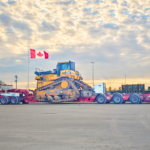
Spring arrives in Western Canada and suddenly everyone is ready to move. Ground thaws, project budgets unlock, and job sites that sat quiet all winter come back to life almost overnight. For heavy haul freight, though, that same energy can be the start of your biggest headache of the year if the logistics side wasn’t planned ahead of time.
The window between road ban season and peak construction demand is short. In that window, specialized carriers, permits, and equipment all get competitive fast.
The Spring-Summer Surge Is Real, and It’s Getting Tighter
Construction season in Alberta and across Western Canada isn’t just a busy period for contractors. It’s the busiest time of year for heavy haul trucking, full stop. Mining operations that held off on equipment moves during winter and road ban season begin ramping up. Infrastructure projects break ground. Modular structures destined for remote sites, work camps, and glamping-style developments need to get moving before summer access windows close.
The challenge isn’t finding a truck. It’s finding the right truck, with the right trailer configuration, at the right time, and having all the permits, routing, and escort coordination locked in before your project timeline depends on it.
When shippers wait until the last minute, they run into one of two problems: they can’t find capacity at all, or they find capacity that isn’t properly equipped for the move, which creates compliance and safety issues down the line.
What “Planning Ahead” Actually Means for Heavy Haul
For standard freight, booking a week or two out is usually fine. Heavy haul doesn’t work that way.
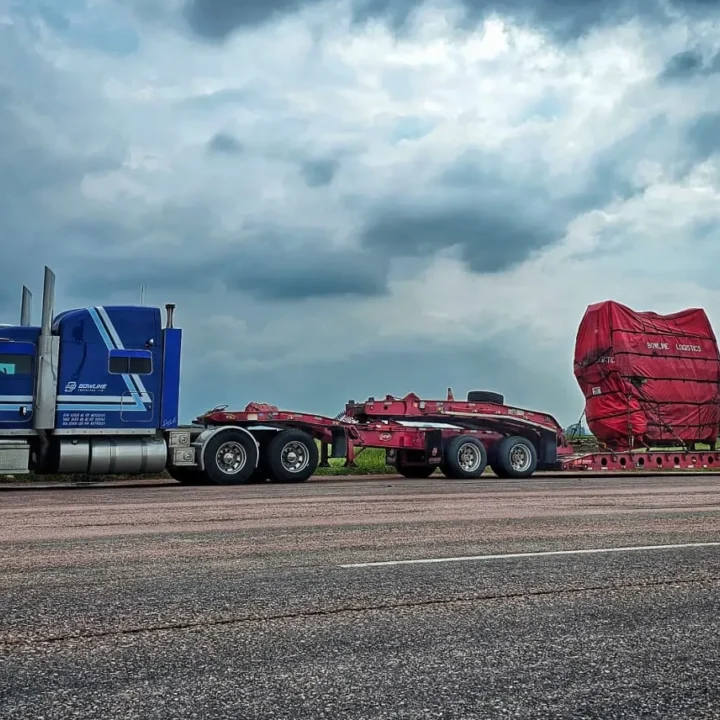
Between the permit application process, route surveys, escort vehicle coordination, and equipment scheduling, a properly planned heavy haul move in Western Canada can take two to four weeks of lead time, sometimes more, depending on load dimensions, destination, and provincial requirements. For complex moves crossing municipal boundaries, heading into remote access areas, or involving multi-truck coordination, you need even more runway.
A few things worth building into your project schedule, keeping in mind that road conditions and weight restrictions across Alberta can shift quickly during this period::
Permit timelines vary by province and load type. Alberta, BC, and Saskatchewan each have their own thresholds, their own processes, and their own approval timelines. A move that’s straightforward in one province might trigger additional requirements the moment it crosses a border. Getting permits wrong or getting them late doesn’t just delay the truck. It can delay your entire project.
Routes need to be confirmed, not assumed. Spring construction season means active road work, temporary closures, and reduced load limits on secondary highways that are still recovering from the thaw. A route that was clean last fall may not be available in May. Your carrier should be doing route surveys and confirming current conditions before your freight ever rolls.
Escort vehicles and pilot cars are booked separately, and they fill up too. This is the piece that catches a lot of shippers off guard. Specialized carriers coordinate the truck, but escort and pilot car availability is its own constraint. During peak season, these resources get stretched. Planning early means you’re not scrambling at the last minute because your load is sitting in the yard waiting on a pilot car.
Construction Equipment Moves: More Common, More Complex
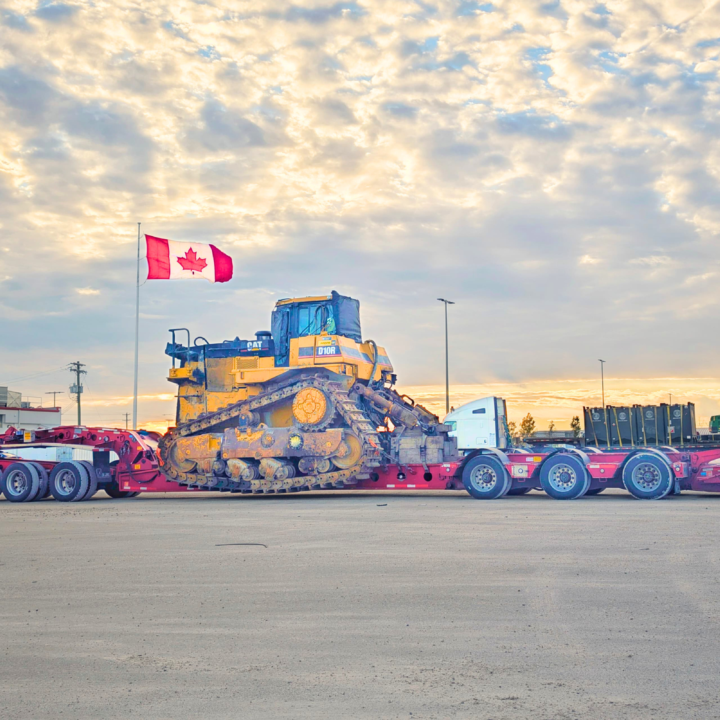
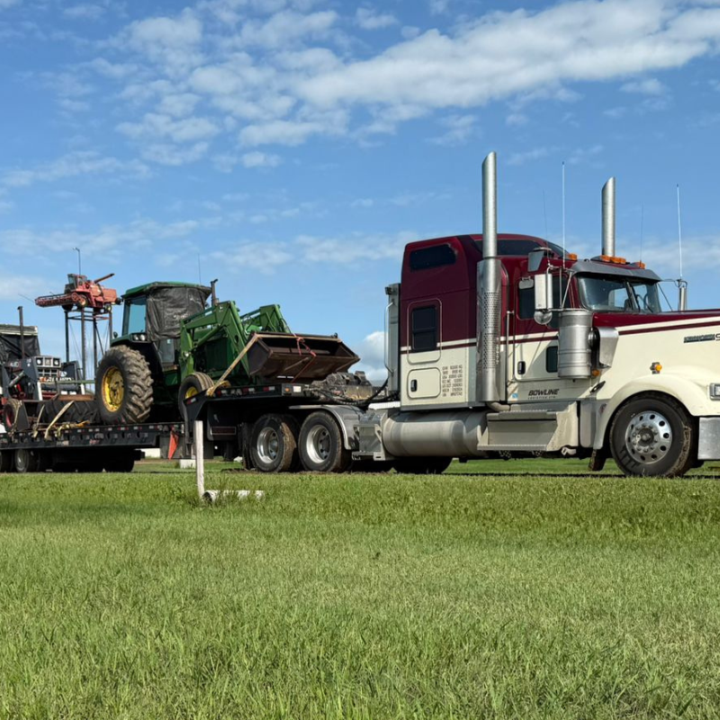
Some of the most time-sensitive heavy haul moves of the season are construction equipment relocations. Excavators, graders, crushers, and loaders don’t wait around. When a project needs them on site, the timeline is usually firm.
What makes these moves tricky is that construction equipment often travels on tight schedules between multiple active job sites. A machine might need to be off one site in northern Alberta and on another by a specific date. That kind of coordination requires more than just a flatdeck and a willing driver. It requires a carrier who understands how to sequence moves, handle loading and unloading at active sites, and communicate clearly when conditions change.
Equipment that self-loads, like excavators, needs the right trailer, typically a lowboy or step deck, and a site with enough clearance to make it work. Showing up with the wrong equipment is a half-day problem that nobody wants mid-season.
Modular and Specialty Structures: A Different Kind of Planning
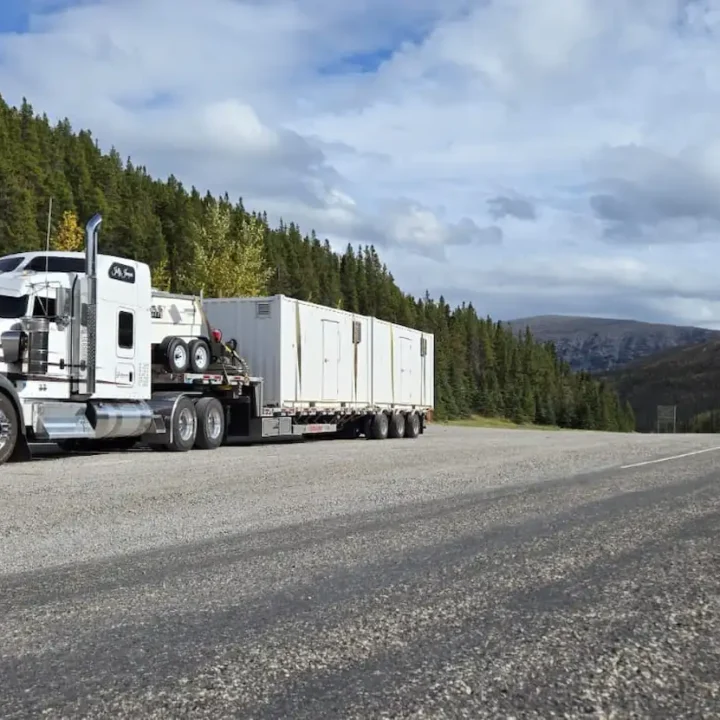
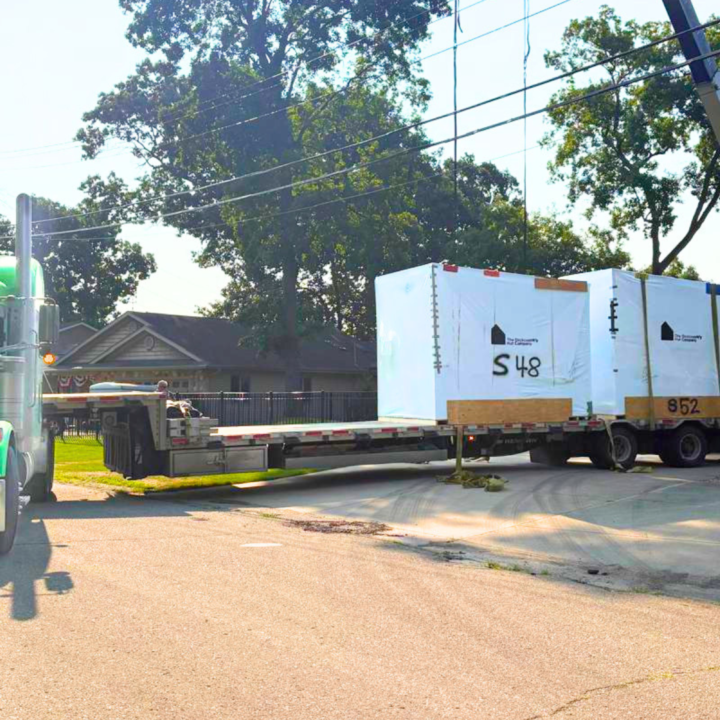
Beyond traditional construction equipment, modular deliveries have become a growing part of the spring and summer heavy haul picture across Western Canada. We’re not just talking about work camp trailers. The space has evolved significantly. Purpose-built cabin units, prefabricated structures for glamping developments, and architecturally designed modular homes are all moving through the region, and many of them require the same level of care as any other oversized freight.
These structures are different from equipment in one important way: they can’t take a hit. A piece of mining equipment is built to absorb punishment. A finished modular unit with interior walls, flooring, and window frames is not. Securing it correctly, choosing the right trailer, and routing around tight corners or low clearances is the whole job.
For these moves, the planning conversation needs to start at the design and manufacturing stage, not when the unit rolls out of the shop. Knowing the final dimensions, delivery site access, and any lifting or placement requirements ahead of time is what allows the transport plan to actually work when it counts.
Mining Season Adds Its Own Layer
For mining operations in northern Alberta and across the region, the seasonal ramp-up brings its own freight challenges. Remote access roads that were impassable or restricted all winter begin opening up, but they don’t all open at the same time, and they don’t all stay open indefinitely.
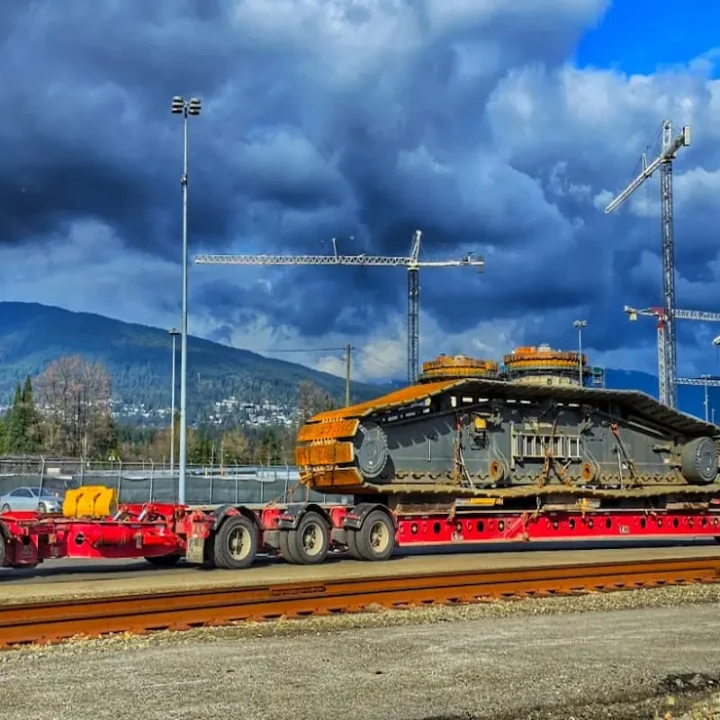
Moving heavy mining equipment to remote sites often requires multi-truck coordination and precise scheduling. Loaders, processors, and excavators frequently arrive in phases because they can’t all land at once, and the order of arrival matters for how crews deploy and set up on site. Getting that sequencing right is part of what separates a carrier who does this regularly from one who doesn’t.
Bridge weight limits on remote access routes are also a real constraint that gets overlooked until it becomes a problem. A thorough route survey, not just a map check, is what catches these issues before they stall a move your team has been planning for weeks.
The Simple Version: Call Early, Ship Smart
None of this is meant to make heavy haul sound impossibly complicated. Experienced carriers do this every season and they know how to make it work. But the single biggest factor in whether a spring or summer heavy haul move goes smoothly is lead time.
The earlier the conversation starts, the more options are on the table. Routes can be scouted properly. Permits can be submitted with time to spare. Equipment can be matched to the load, not just whatever’s available. And when something comes up, because something always comes up, there’s room to adapt without derailing the whole project.
If you’ve got heavy haul freight moving this construction season, the best time to start planning was last month. The second-best time is now. Get in touch with the Bowline team and let’s build a plan that works.
– –
ABOUT THE AUTHOR
DeVaughn McEwan – Inside Sales & Marketing Lead

DeVaughn works across inside sales and content development at Bowline Logistics, where his focus with Bowline Insights is on making the complex world of heavy haul and oversized freight easier to understand. With a background spanning marketing, finance, and the transportation industry, he translates technical logistics into clear, real-world insights drawn from the work happening on the ground. If you’ve ever wished someone would just explain freight in plain language, that’s the goal.